In short
How to choose the right colour temperature (CCT) for linear LED lighting in offices, hospitality, education and residential interiors.
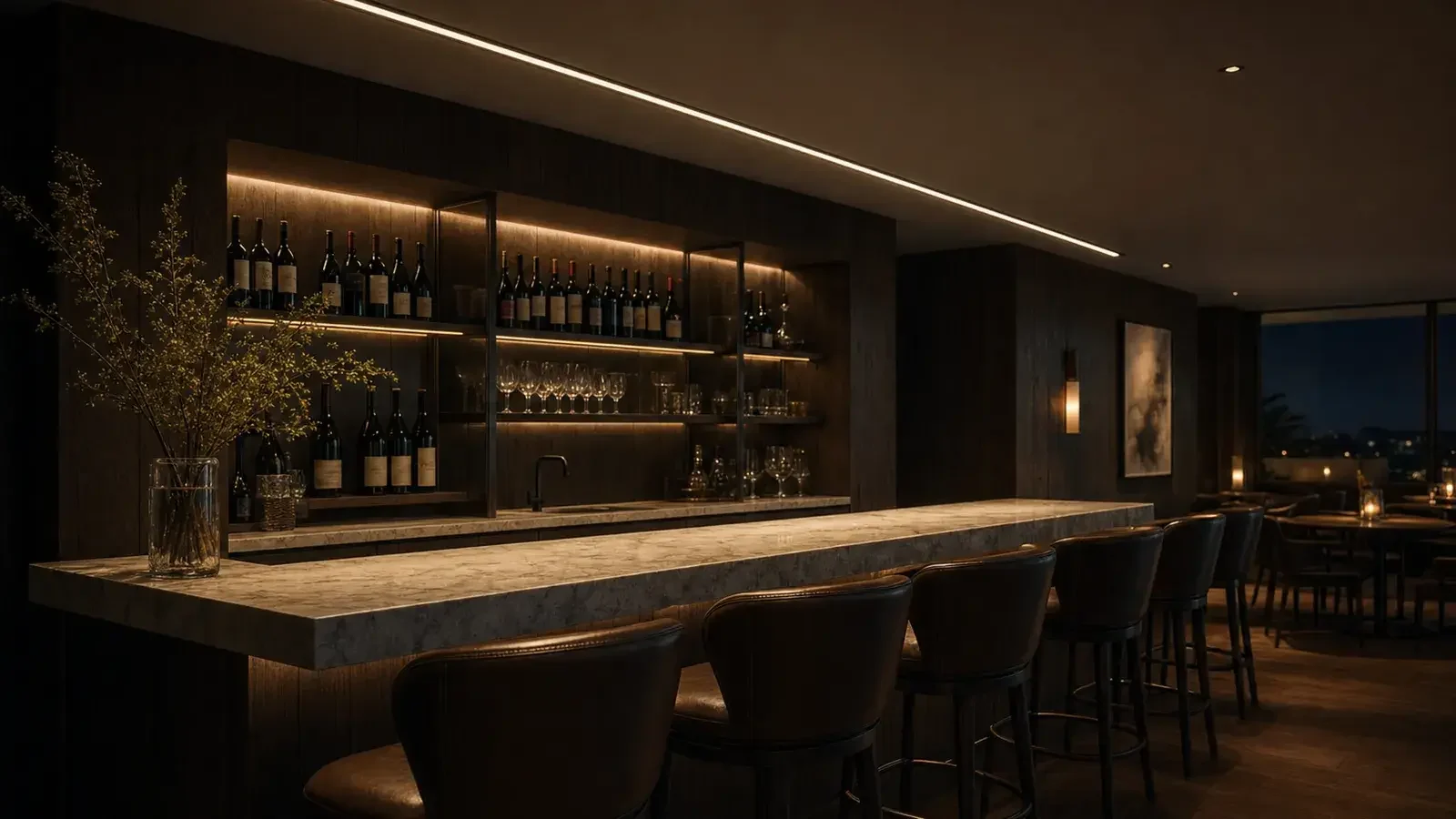
Colour temperature, measured in Kelvin (K), sets the mood of a space before anyone notices the fittings. Linear lighting makes the choice more visible because the light lines themselves are part of the design.
The common options
| CCT | Character | Typical use |
|---|---|---|
| 2700K | Warm, intimate | Hospitality, residential, lounges |
| 3000K | Warm white, relaxed | Restaurants, retail, receptions, premium offices |
| 3500K | Neutral-warm | Mixed-use workplaces |
| 4000K | Neutral, crisp | Offices, education, healthcare |
Match the architecture and materials
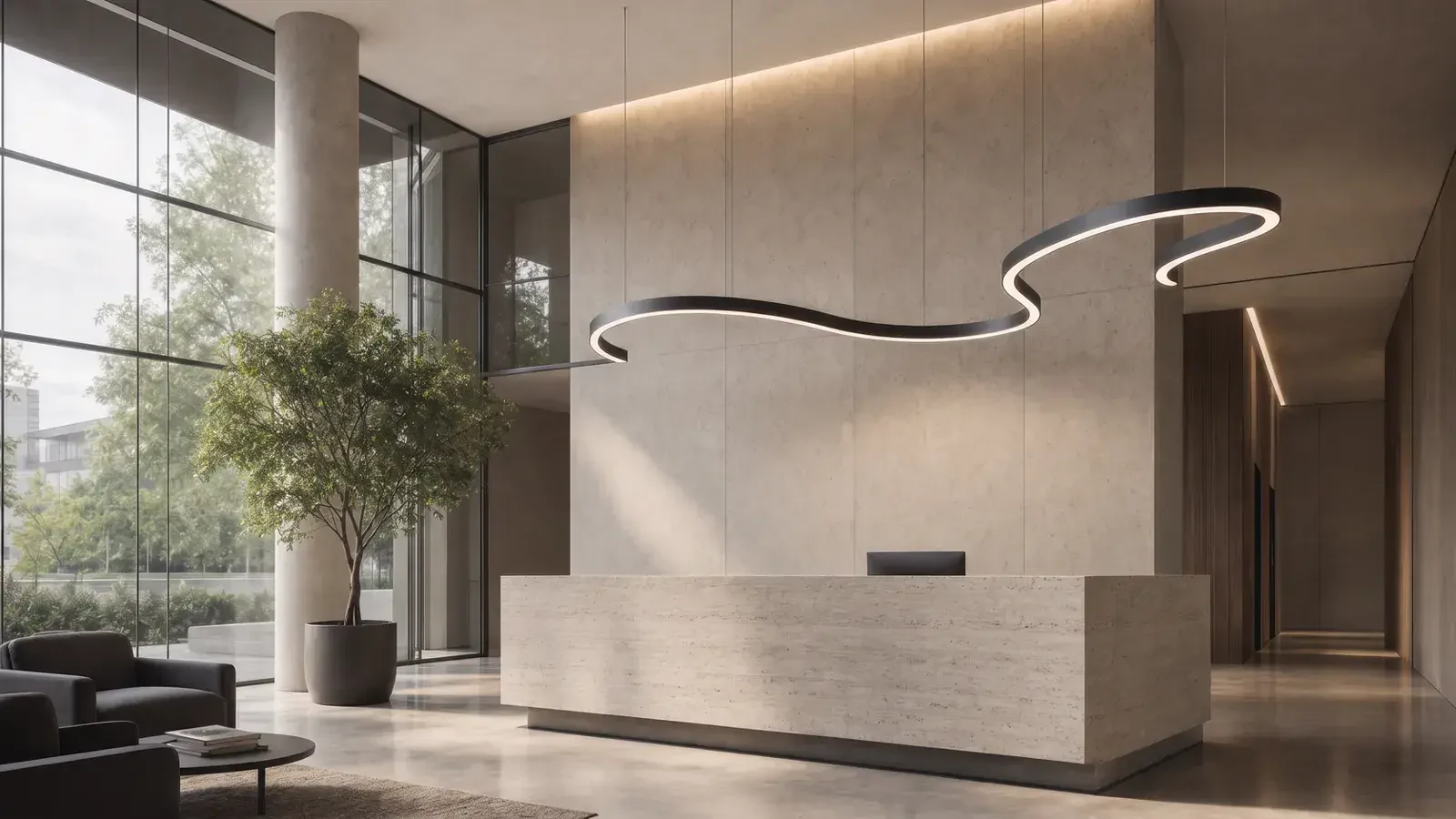
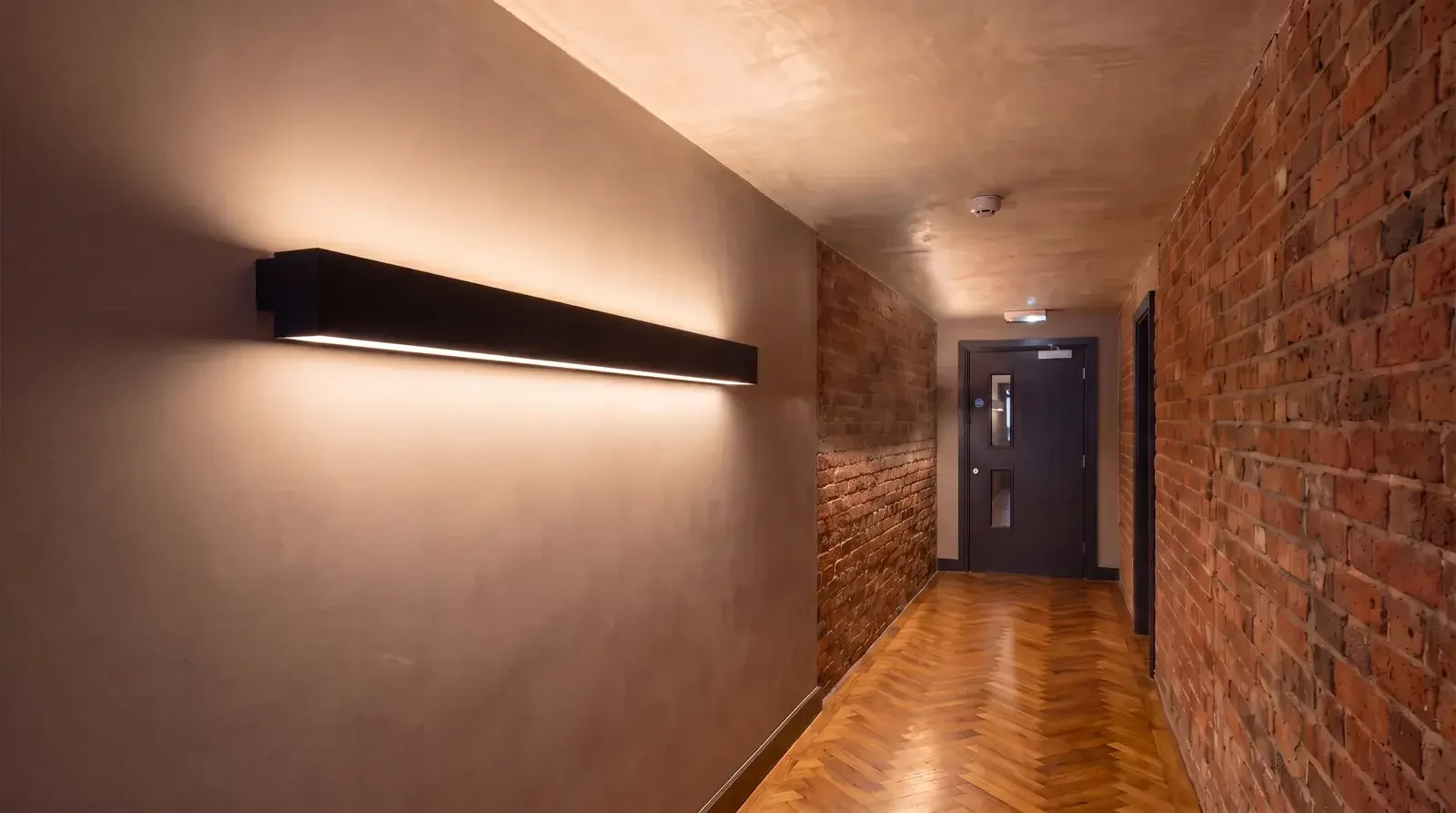
Warm timber, brass and textiles come alive at 2700–3000K. Concrete, white walls and cool stone read cleaner at 4000K. Look at your material palette before picking a number.
Keep it consistent
Mixing colour temperatures by accident is one of the quickest ways to make a scheme look cheap. Specify the same CCT and binning across all linear, downlight and wall fittings in one space.
Tunable white
Where people work long hours or daylight changes a lot, tunable white systems let you shift between warm and cool through the day, controlled via DALI or Casambi.
Not sure which to choose? Ask for a sample and see it in your own space.
Further reading at 299 Lighting
Next steps on linear-led.com
Specifying a linear scheme?
Send us your drawings or brief. We'll come back with a shortlist, photometrics and LG7 calculations.
Start a project →Frequently asked questions
What colour temperature is best for offices?
Most UK offices use 4000K, or 3000–3500K for a warmer, more hospitable feel in premium or mixed-use workplaces.
Can linear lighting change colour temperature?
Yes. Tunable white linear systems can adjust colour temperature using DALI DT8 or Casambi controls.