In short
How to plan continuous linear LED runs, junctions, corners and curved sections for architectural and commercial interiors.
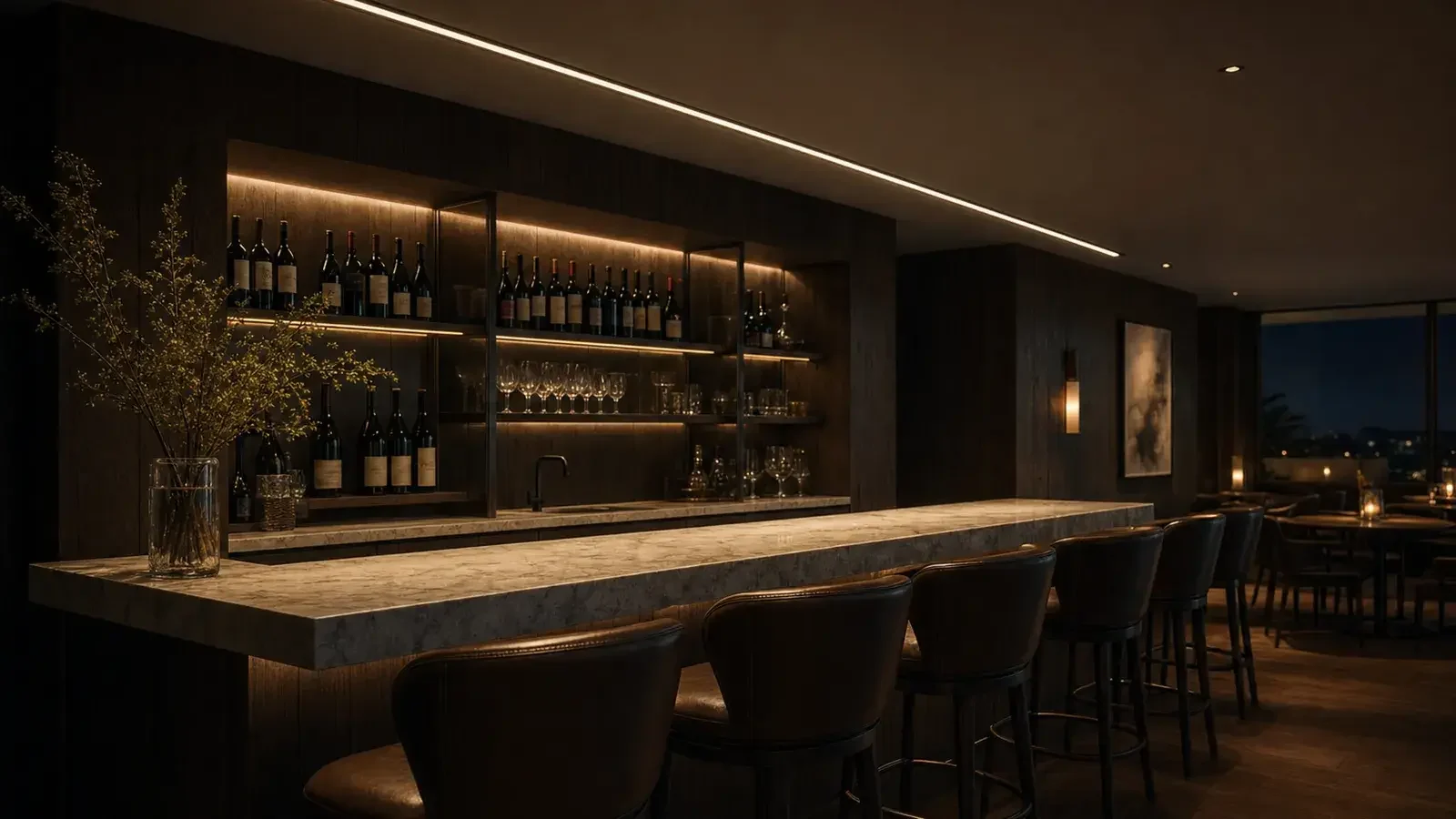
The most memorable linear schemes are rarely a row of separate fittings. They are unbroken lines that turn corners, meet at junctions and follow curves, treating light as part of the architecture.
Continuous runs
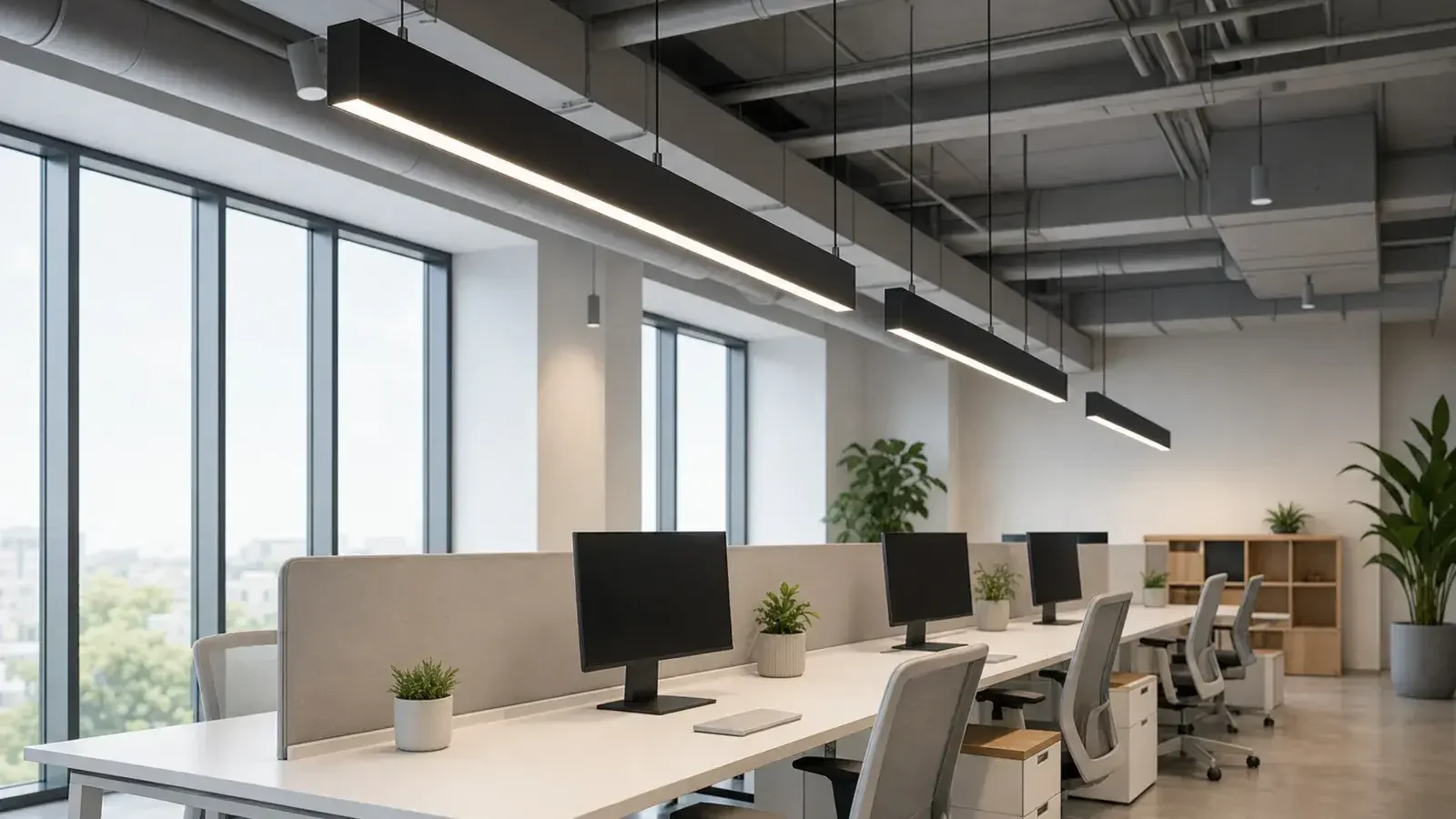
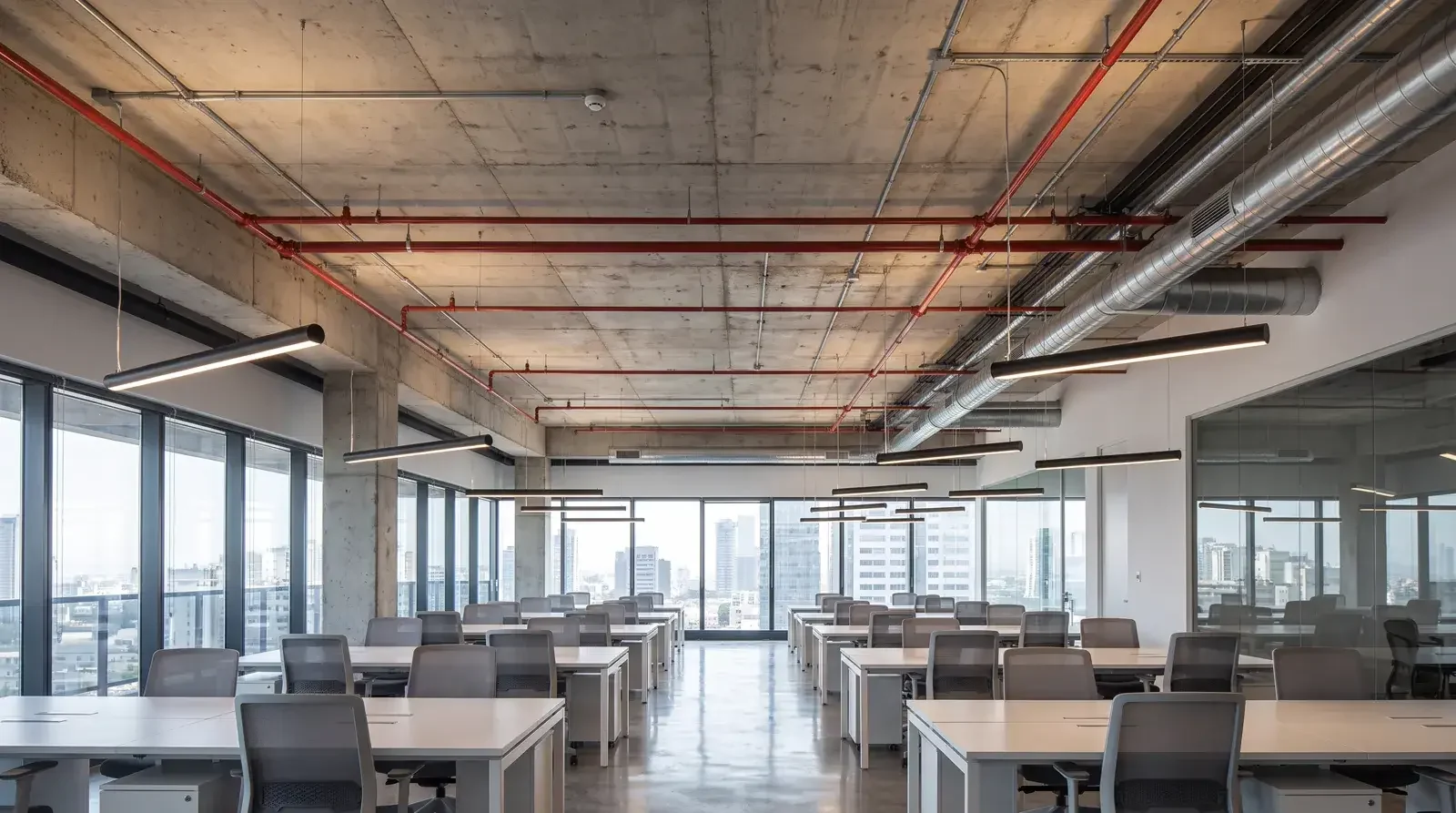
Continuous systems join modules end to end with no dark gaps, so a single line can run the length of an office floor. Made-to-measure lengths let the line finish exactly at a wall, column or glazing mullion.
Corners, junctions and geometry
L-corners, T- and X-junctions let lines form grids, rectangles and custom geometric shapes that echo a ceiling plan or furniture layout.
Curves
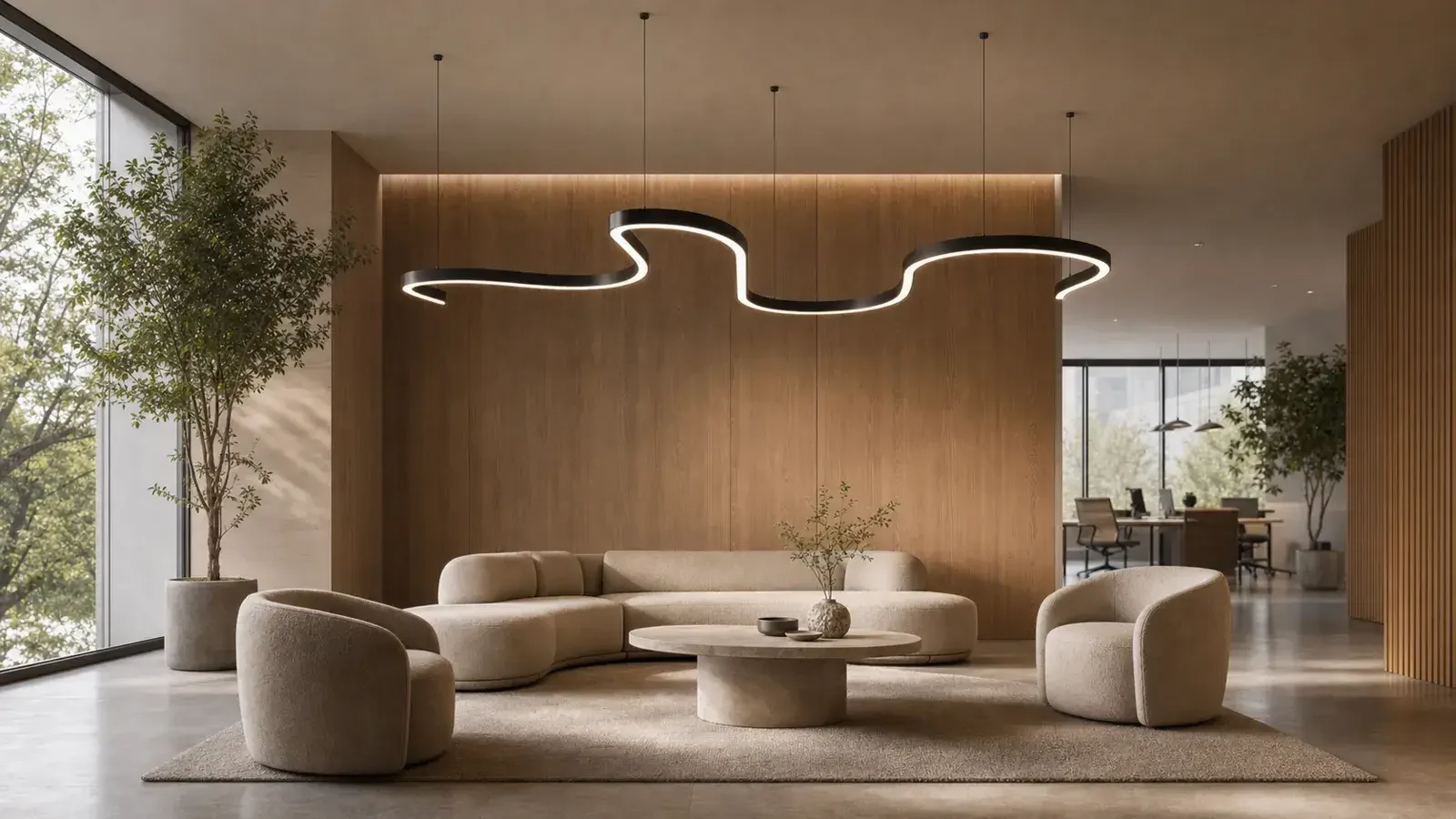
Curved sections, as in the Lena range, soften a space and are often used over receptions, collaboration areas and in hospitality.
What to agree early
- Setting-out dimensions from your reflected ceiling plan
- Suspension points and ceiling structure
- Driver locations and access
- Controls zoning (DALI or Casambi) and emergency fittings within the run
Our in-house team turns these drawings into buildable systems. See bespoke linear lighting.
Further reading at 299 Lighting
Next steps on linear-led.com
Specifying a linear scheme?
Send us your drawings or brief. We'll come back with a shortlist, photometrics and LG7 calculations.
Start a project →Frequently asked questions
Can linear LED lighting go around corners?
Yes. Continuous linear systems can include corners, T and X junctions, and curved sections to create custom shapes.
How long can a continuous linear run be?
Continuous systems can be joined to almost any length. Runs are made to measure to suit your drawings.