In short
How direct and direct/indirect linear LED luminaires differ, and when to use each in offices, education and hospitality.
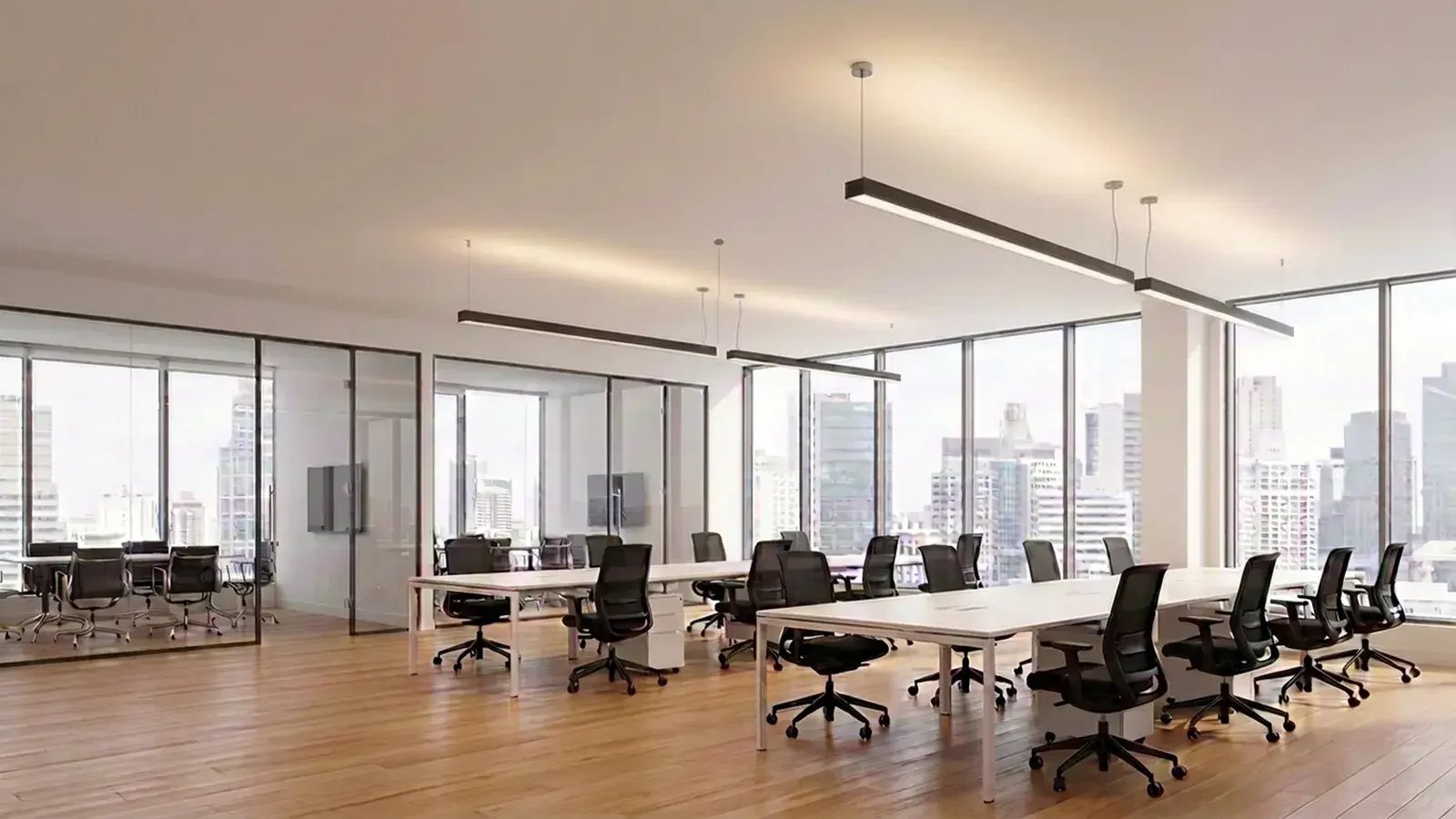
Two suspended linear luminaires can look almost identical from below and still create completely different rooms. The difference is where the light goes.
Direct lighting
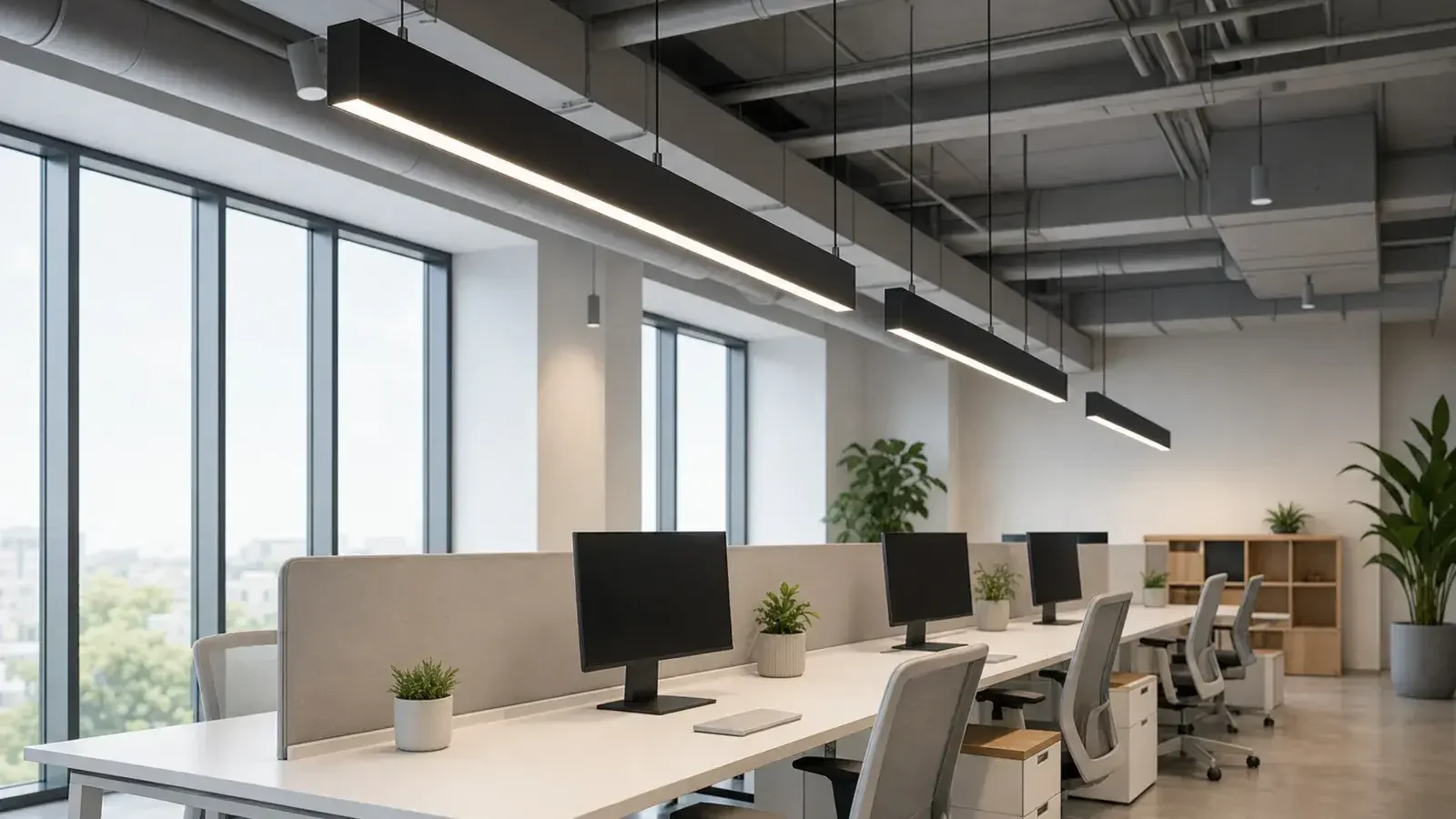
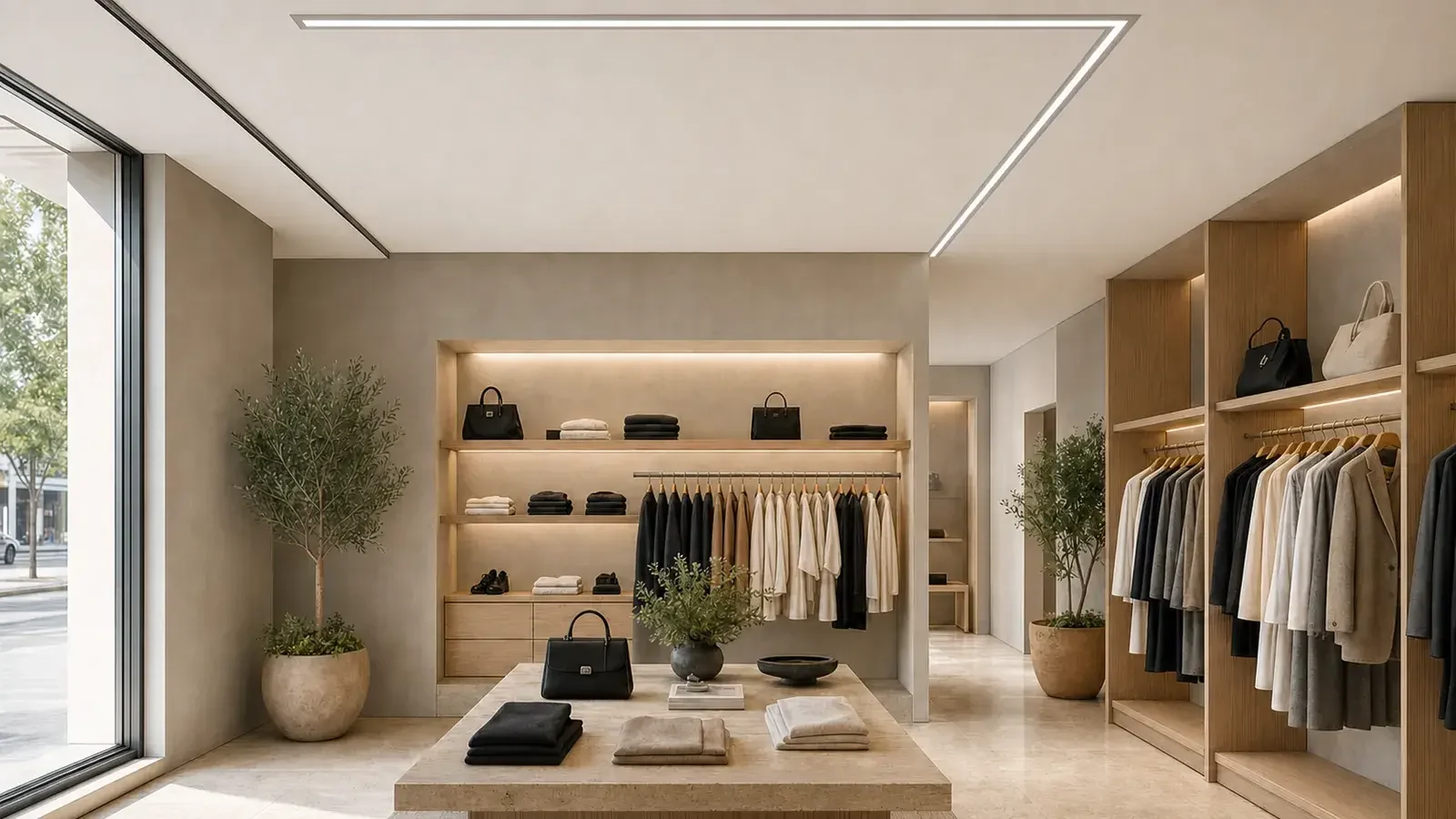
A direct luminaire sends all of its output downward. It is efficient, precise and gives crisp control over where light lands, which makes it well suited to circulation, retail displays and spaces with dark or high ceilings where uplight would be wasted.
Direct/indirect lighting
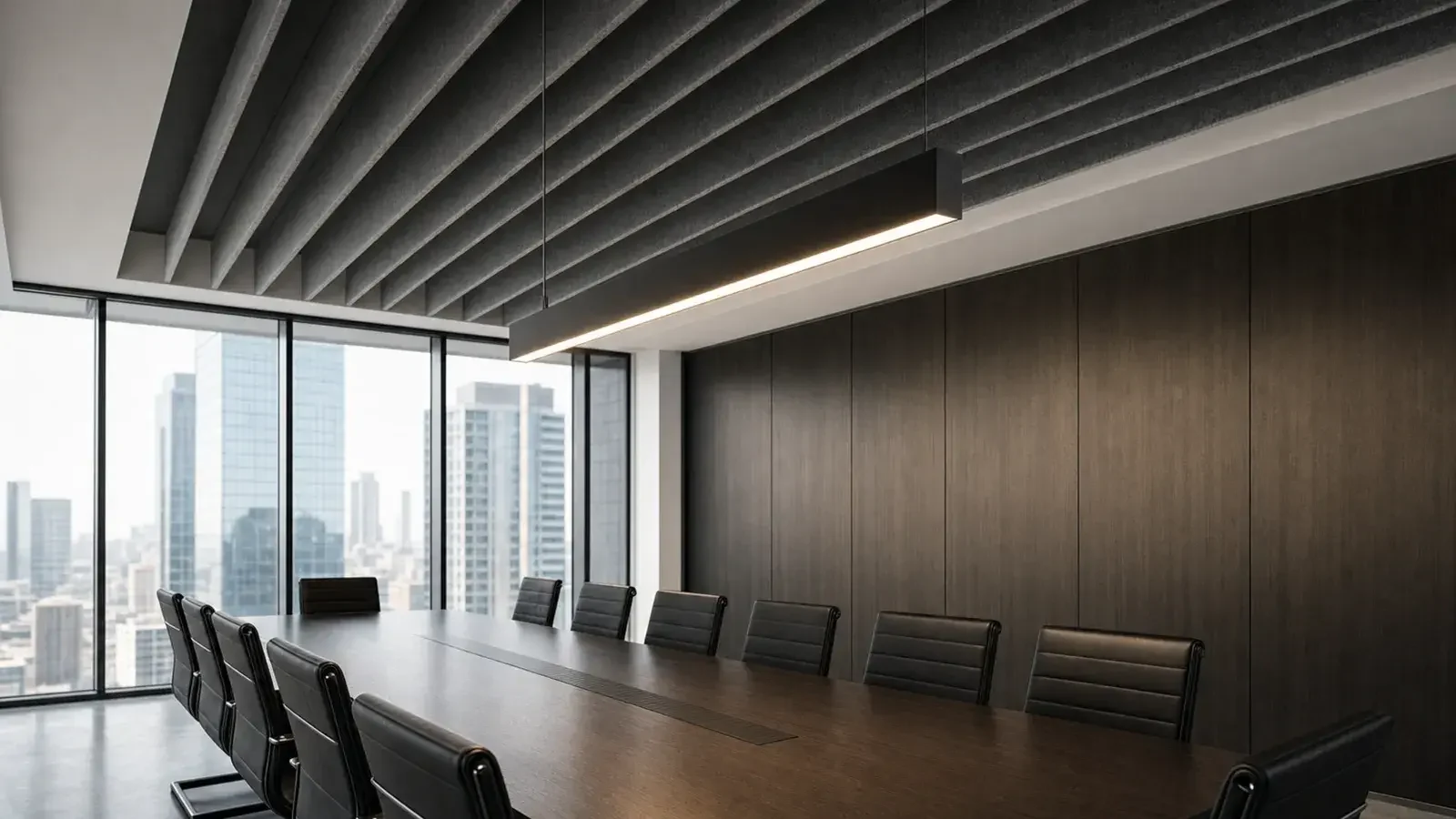
A direct/indirect luminaire splits its output. Part goes down to the task, and part goes up to the ceiling, which then acts as a large, soft secondary light source. The result is a brighter-feeling room with lower contrast and reduced glare.
Why it matters for LG7
CIBSE LG7 asks designers to consider the brightness of walls and ceilings, not just the desk. Direct/indirect linear is one of the simplest ways to achieve the recommended ceiling and wall illuminance in offices, and many of our linear and suspended systems are specifically designed to meet LG7 guidelines.
| Direct | Direct / Indirect | |
|---|---|---|
| Feel of the room | Focused, dramatic | Bright, open, calm |
| Glare | Controlled by optics | Lower contrast overall |
| Ceiling height | Any | Best with 2.7 m and above |
| Best for | Circulation, retail, feature | Offices, classrooms, meeting rooms |
A practical rule of thumb
If people will sit and work under it for hours, start with direct/indirect. If the light is there to create drama or guide movement, start with direct. Rio, Arno, Clyde and Oka are all available in both versions, so you can mix them across a scheme without changing the visual language. Explore the collections.
Further reading at 299 Lighting
Next steps on linear-led.com
Specifying a linear scheme?
Send us your drawings or brief. We'll come back with a shortlist, photometrics and LG7 calculations.
Start a project →Frequently asked questions
What is direct/indirect lighting?
A direct/indirect luminaire emits light both downward to the task and upward to the ceiling, creating softer, more comfortable illumination with reduced glare.
Is direct/indirect lighting more efficient?
Direct lighting is usually more efficient at putting light on the task, but direct/indirect improves visual comfort and helps meet CIBSE LG7 recommendations for ceiling and wall brightness.