In short
How emergency lighting can be integrated into linear LED luminaires and continuous runs without adding visual clutter to the ceiling.
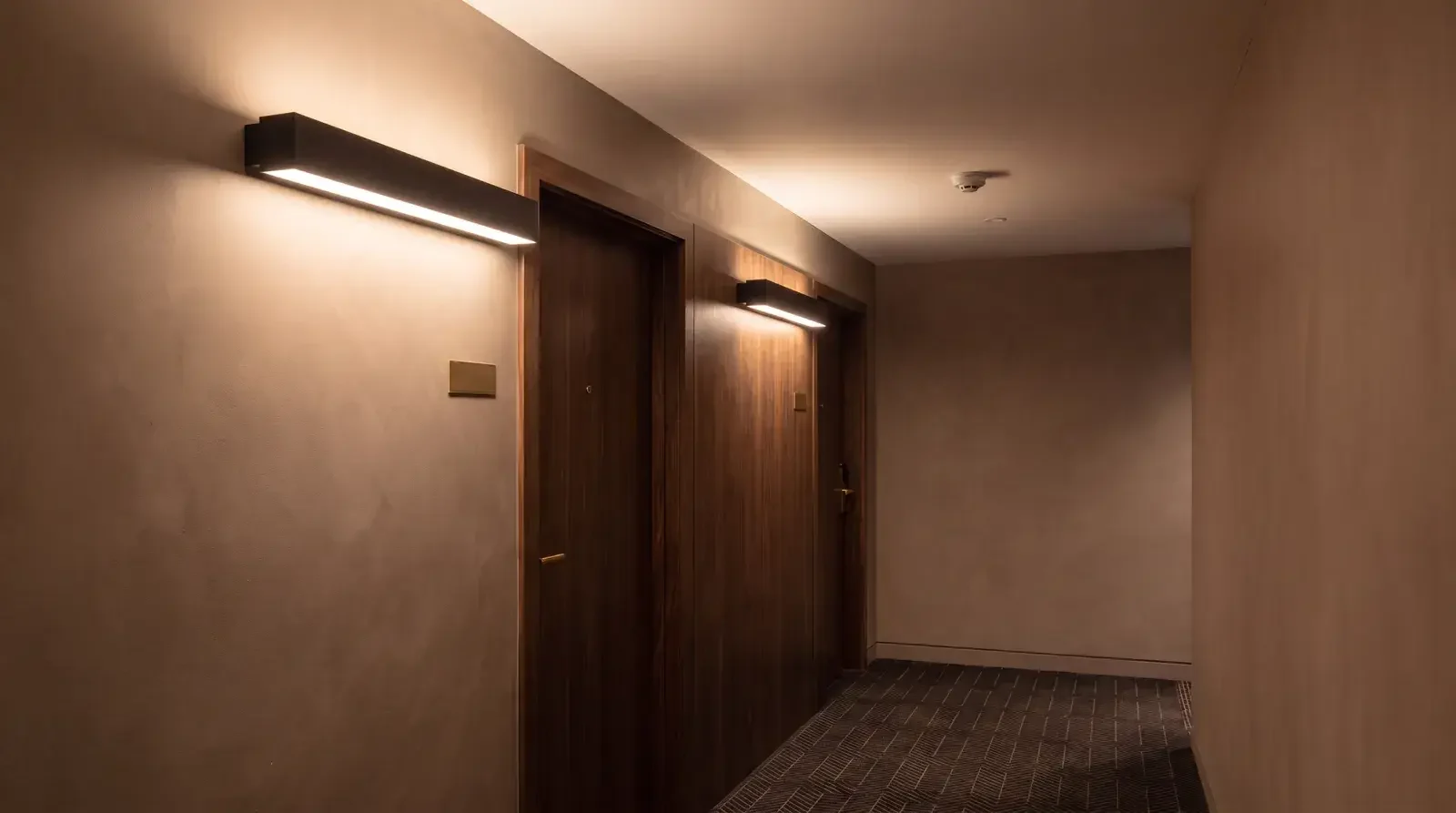
Nothing spoils a clean linear ceiling faster than a scatter of separate emergency fittings. Integrating emergency lighting into the linear system keeps the design intact and the building compliant.
How integrated emergency works
Selected luminaires or modules within a run are fitted with an emergency pack and battery. On mains failure they switch to battery power and provide escape lighting for the required duration. In the UK that is typically three hours for most commercial buildings.
Designing to BS 5266-1
- Escape routes and open areas need defined minimum illuminance
- Points of emphasis, such as exits, stairs, changes of direction and fire equipment, need coverage
- Self-test or DALI-monitored emergency simplifies maintenance and record keeping
Keep it invisible
With emergency built into the linear profile, there is no visual difference between standard and emergency sections. For continuous runs, emergency modules sit within the line at the calculated spacing.
Plan it with the scheme
Emergency positions should be calculated alongside the general lighting, not added at the end. We deliver complete packages, making sure the scheme is compliant, emergency lighting is taken care of, and all lighting criteria are met.
Ask for an emergency lighting layout.
Further reading at 299 Lighting
Next steps on linear-led.com
Specifying a linear scheme?
Send us your drawings or brief. We'll come back with a shortlist, photometrics and LG7 calculations.
Start a project →Frequently asked questions
Can linear lights include emergency lighting?
Yes. Linear LED luminaires and continuous runs can include integrated emergency modules that switch to battery power during a mains failure.
How long should emergency lighting last?
In most UK commercial buildings, emergency lighting is designed for a three-hour duration, in line with BS 5266-1.