In short
How to detail recessed and trimless linear LED lighting in plasterboard ceilings: coordination, voids, access, drivers and programme.

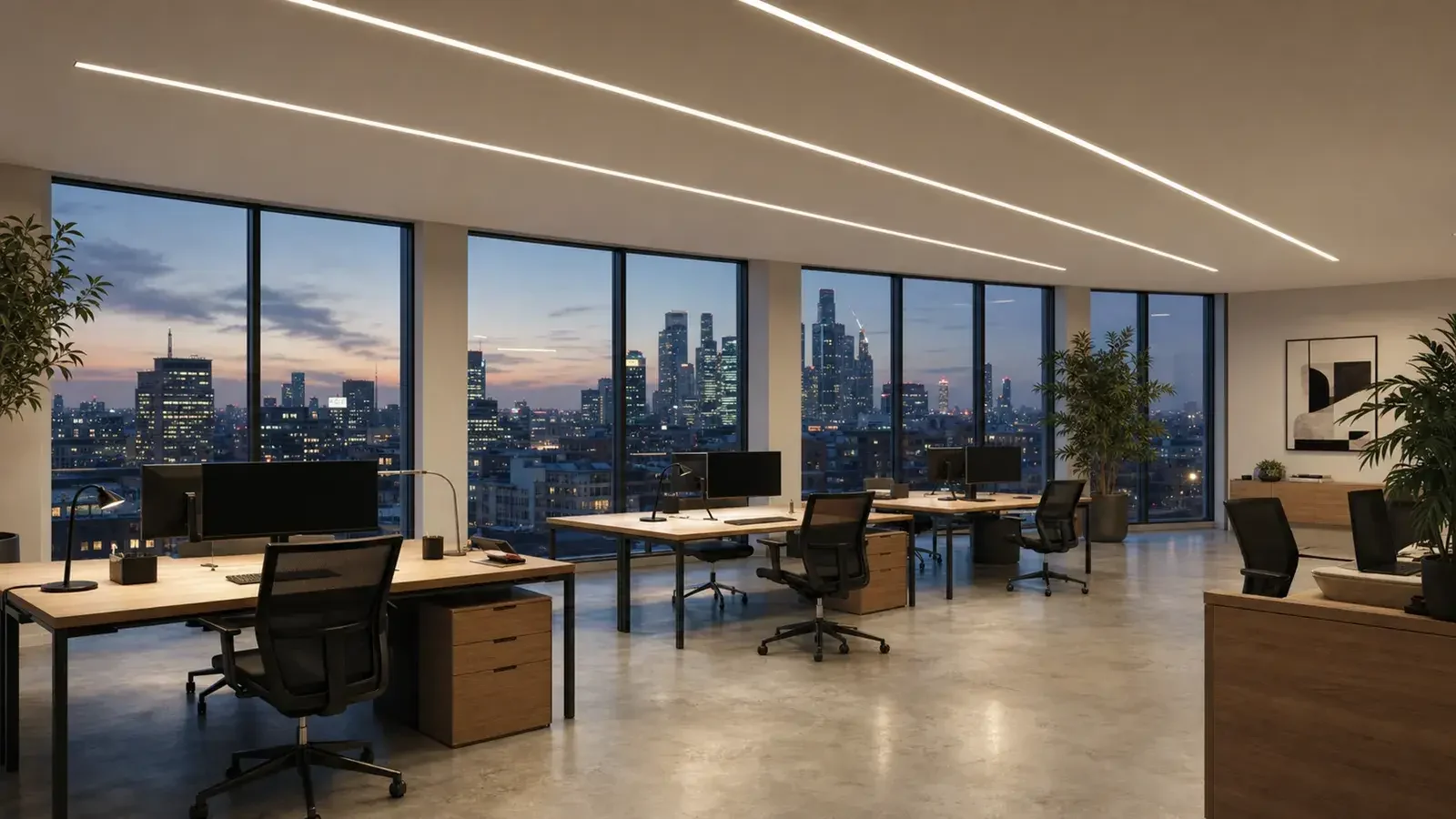
Recessed linear lighting in plasterboard is one of the most elegant details in contemporary interiors, and one of the easiest to get wrong. Early coordination is everything.
Check the void
Confirm the ceiling void depth against the profile depth and driver size, and check for clashes with ductwork, sprinklers, pipework and structure along the full length of each run.
Trim or trimless
Trimless profiles are installed before boarding is finished and are plastered in. Trimmed profiles fit into a cut opening afterwards. The choice affects programme, trades and tolerances. Read our comparison.
Drivers and access
Decide whether drivers sit inside the profile or remotely in the void, and make sure they can be reached for maintenance, either through the profile or via access panels.
Setting out
- Set out runs from the reflected ceiling plan and confirm on site
- Align with walls, mullions and ceiling features
- Agree joint positions for long runs
Protect the finish
Keep diffusers protected until decoration is complete to avoid dust and paint damage.
Further reading at 299 Lighting
Next steps on linear-led.com
Specifying a linear scheme?
Send us your drawings or brief. We'll come back with a shortlist, photometrics and LG7 calculations.
Start a project →Frequently asked questions
How deep does a ceiling void need to be for recessed linear lighting?
It depends on the profile and driver. Check the product depth and driver dimensions and allow space for services and access.
When is trimless linear lighting installed?
Trimless profiles are installed during ceiling construction, before plastering, so they must be coordinated early with the drylining contractor.