In short
How daylight-linked dimming and presence detection reduce energy use in linear LED lighting schemes without compromising comfort.
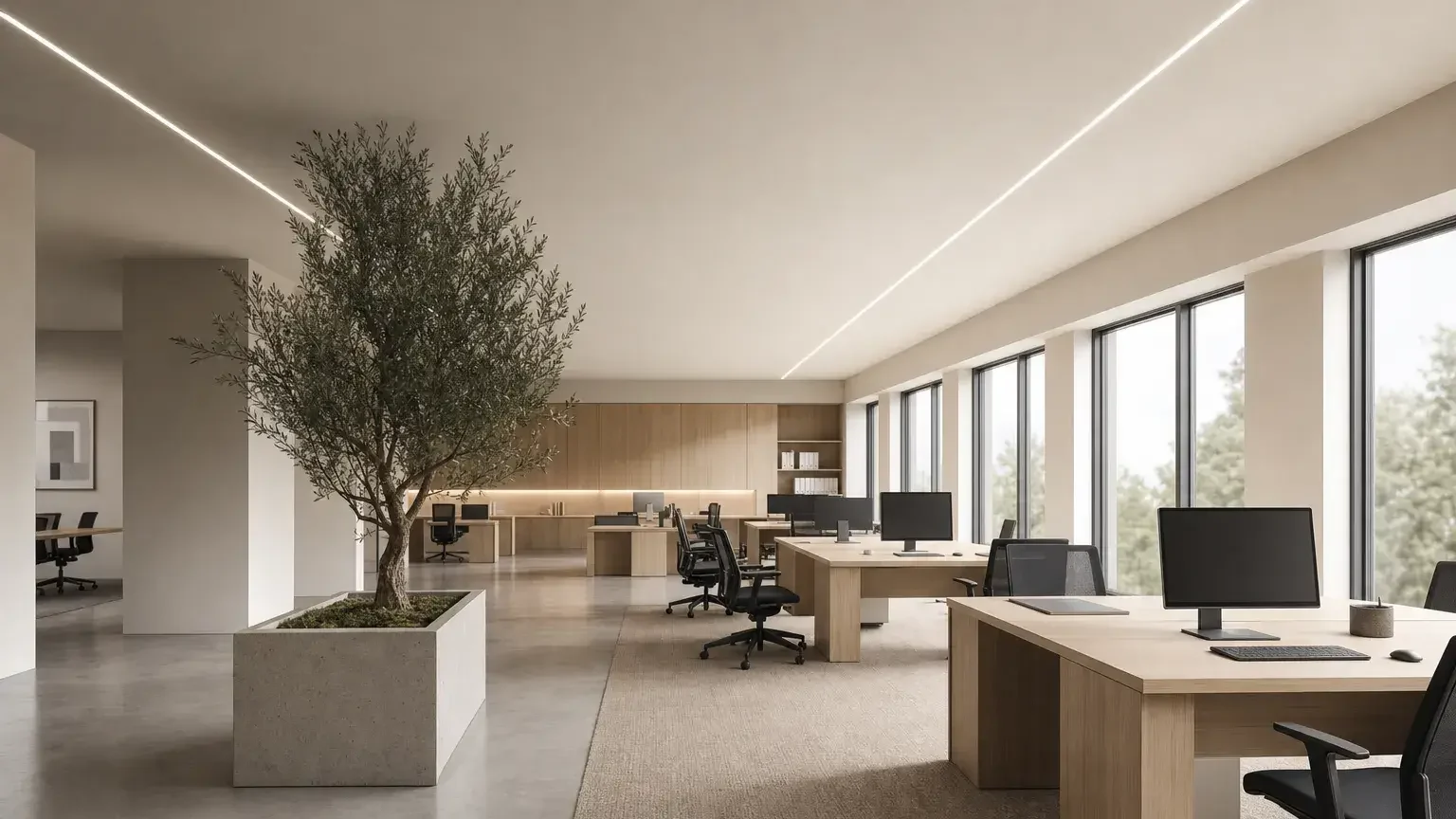
The cheapest energy is the energy you don't use. Daylight dimming and presence detection are the two simplest ways to cut lighting energy in commercial buildings.
Daylight dimming
Sensors measure the light level in a zone and dim the luminaires when daylight is available. Rows nearest the windows dim the most, keeping the illuminance steady across the room.
Presence and absence detection
Presence detection switches lights on when someone enters and off when the space is empty. Absence detection requires a manual switch-on but switches off automatically, which often saves more energy in rooms with good daylight.
Design tips
- Zone luminaires parallel to the windows
- Use absence detection in meeting rooms
- Set sensible time delays to avoid lights switching off on seated occupants
- Commission properly and review after occupancy
Linear systems with DALI or Casambi make these strategies straightforward. Talk to our controls team.
Further reading at 299 Lighting
Next steps on linear-led.com
Specifying a linear scheme?
Send us your drawings or brief. We'll come back with a shortlist, photometrics and LG7 calculations.
Start a project →Frequently asked questions
What is daylight dimming?
A control strategy that uses light sensors to dim luminaires when daylight is available, keeping light levels steady while saving energy.
What is the difference between presence and absence detection?
Presence detection switches lights on and off automatically. Absence detection needs a manual switch-on but switches off automatically.