In short
The main factors that affect the price of a linear LED lighting scheme, from output and optics to controls, bespoke lengths and installation.
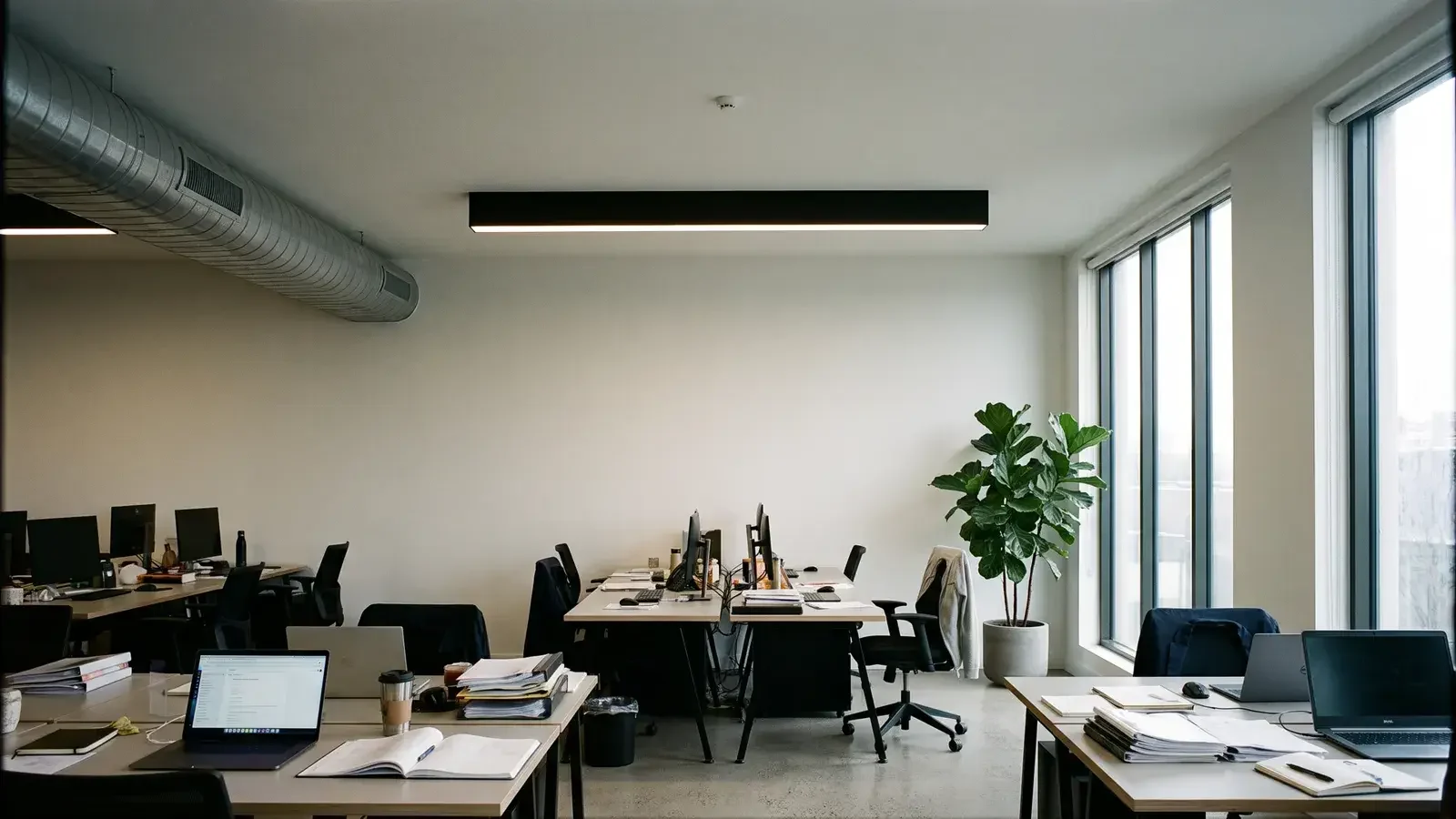
Two linear lighting quotes for the same room can look very different. Understanding what drives cost helps you compare fairly and spend where it matters.
The main cost drivers
- Metres of line: continuous runs cost more than separate fittings, but look better
- Mounting type: trimless recessed involves more coordination and labour
- Output and optics: high-output and low-glare optics add cost
- Colour quality: CRI 90 and tunable white cost more than CRI 80 fixed white
- Controls: DALI or wireless controls add drivers, sensors and commissioning
- Emergency: integrated emergency modules and batteries
- Bespoke: custom lengths, curves, junctions and finishes
Where to spend
Prioritise quality in the spaces clients and staff use most, such as receptions, meeting rooms and main work areas, and use simpler specifications in back-of-house zones.
Think whole-life
Efficient luminaires with good controls cost less to run and maintain. Over a building's life, energy and maintenance usually outweigh the initial price difference.
Request a quote with your drawings.
Further reading at 299 Lighting
Next steps on linear-led.com
Specifying a linear scheme?
Send us your drawings or brief. We'll come back with a shortlist, photometrics and LG7 calculations.
Start a project →Frequently asked questions
How much does linear LED lighting cost?
It depends on metres of line, mounting type, output, optics, colour quality, controls, emergency and any bespoke elements. A quote from drawings is the best guide.
Is continuous linear lighting more expensive?
Continuous runs usually cost more than separate fittings but give a cleaner, more architectural result.