In short
What linear LED lighting is, the main mounting types, direct vs indirect distribution, and how to specify it for commercial interiors.
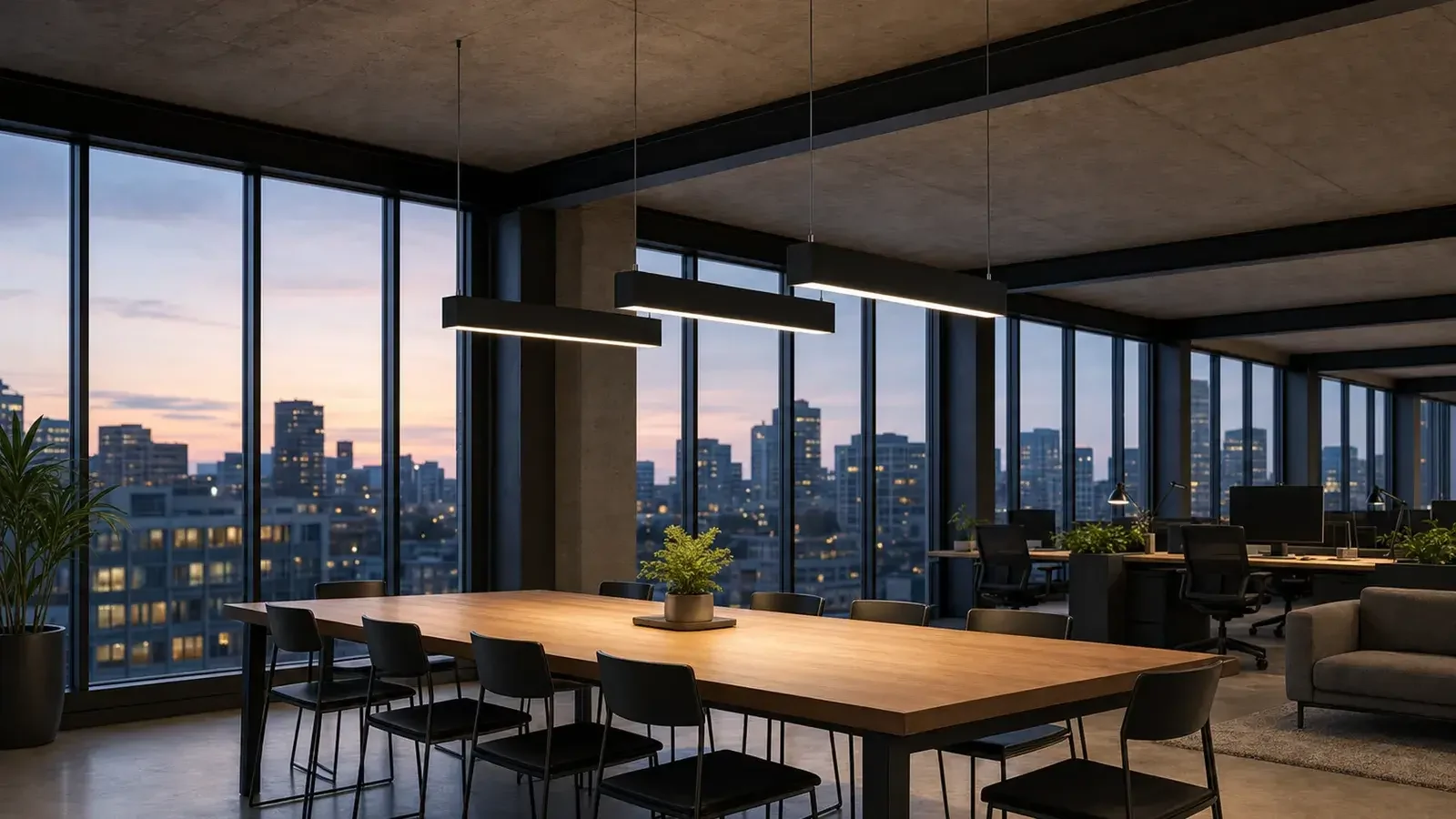
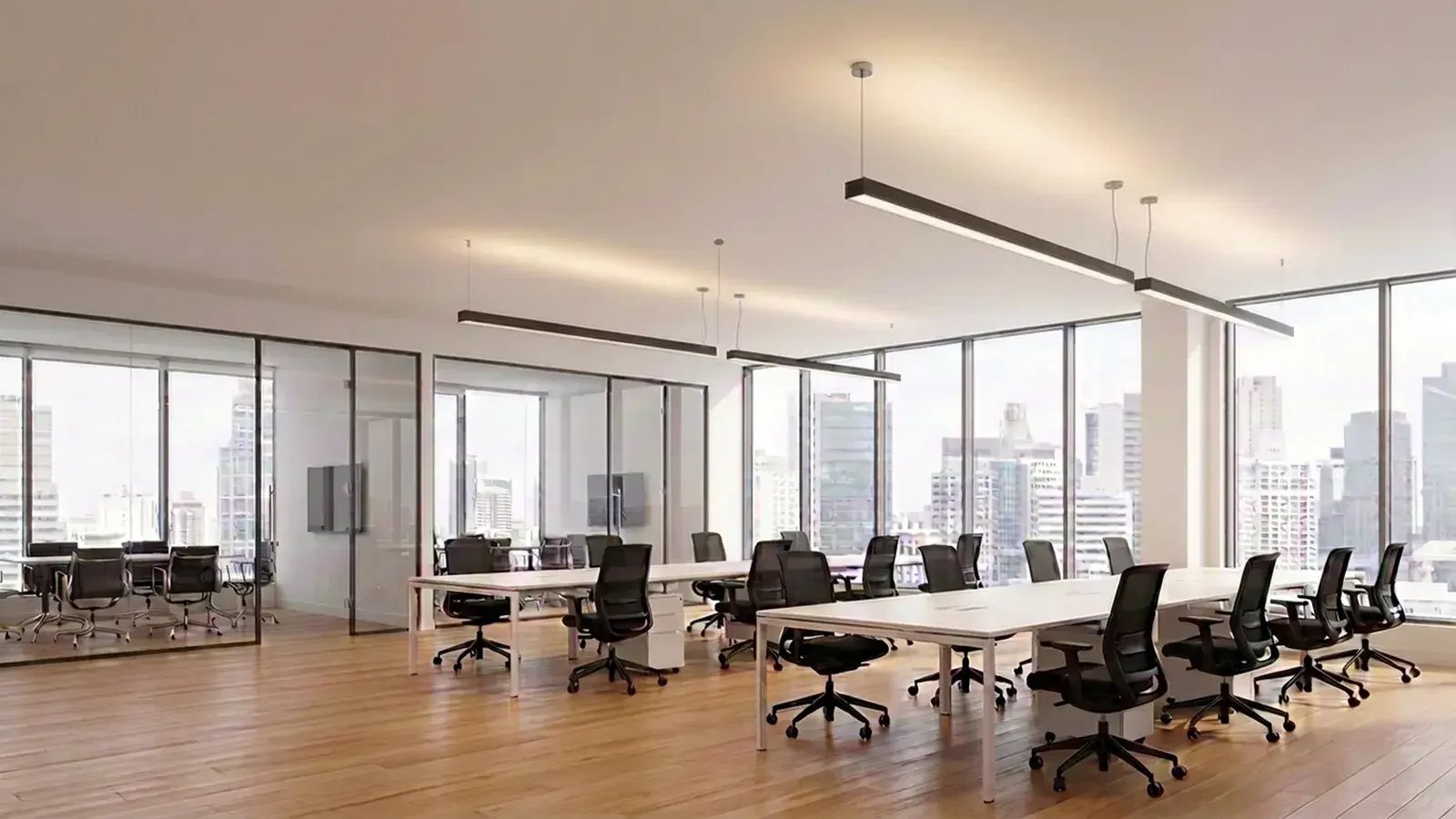
Linear LED lighting uses long, narrow luminaires to create continuous, uniform lines of light. It has become the default language of contemporary commercial interiors because it does two jobs at once: it lights the space well, and it draws on the architecture, reinforcing grids, leading the eye and defining zones.
This guide covers what architects and interior designers need to know at concept stage: mounting types, light distribution, performance metrics and the questions to settle before a scheme goes to tender.
The four mounting types
Suspended (pendant)
Hung on cables below the ceiling. Suspended linear is the most flexible option for open plan offices, atria and double-height spaces, and the obvious choice when the luminaire is a design feature. See suspended linear systems.
Recessed: trim or trimless
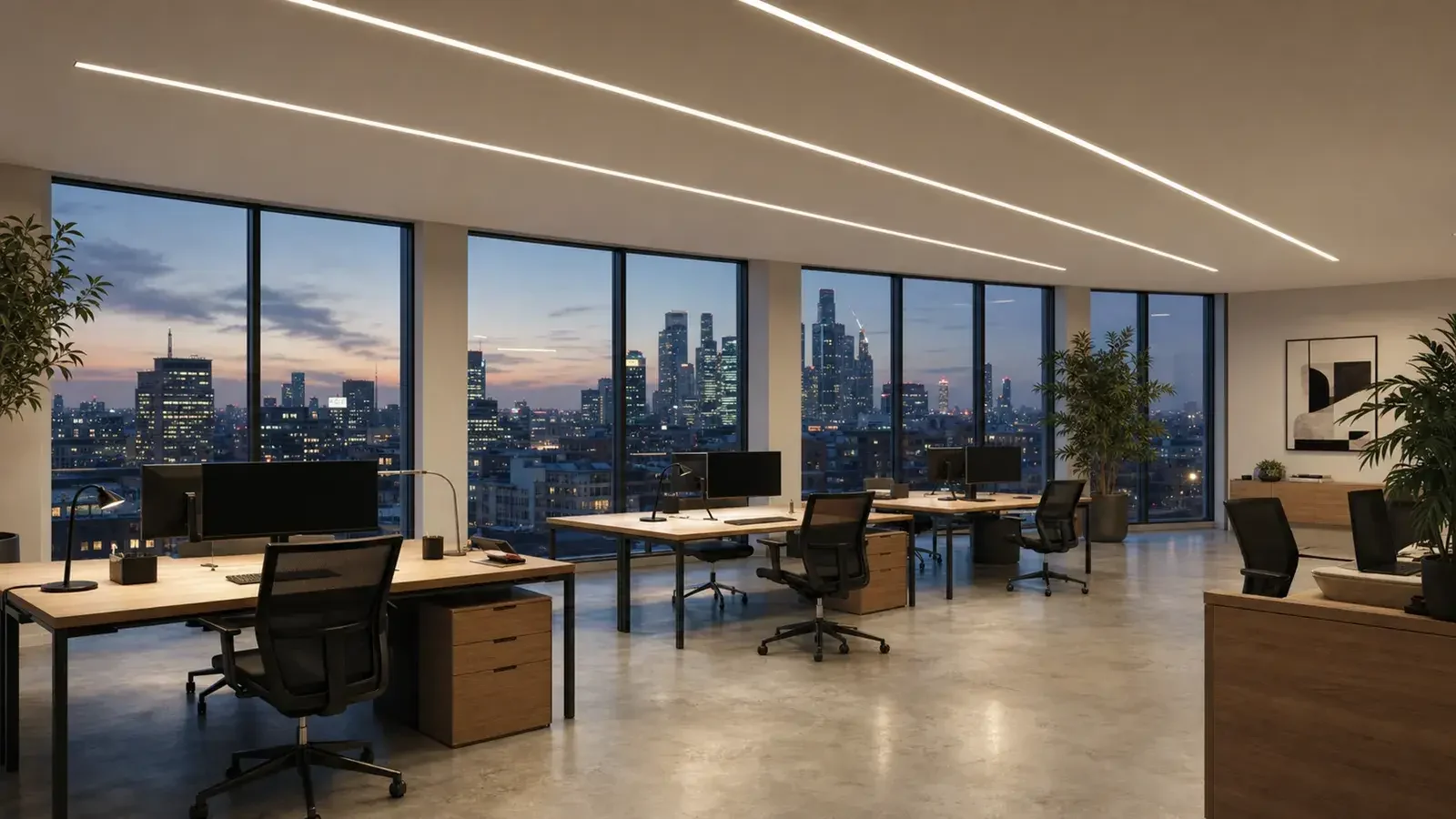
Set into the ceiling so the light line sits flush with the plane. Trimless versions are plastered in for a seamless, architectural finish. Trimmed versions are faster to install in grid or plasterboard ceilings.
Surface mounted
Fixed directly to the soffit. This is ideal where there is no ceiling void: exposed concrete, CLT and many refurbishments.
Wall mounted
Used for corridors, feature walls and indirect uplight, often to balance a scheme so the walls don't feel dark.
Direct, indirect or both
Direct distribution sends light down to the working plane and is efficient and precise. Direct/indirect luminaires also send part of the light up to wash the ceiling. That lifts the perceived brightness of the room, reduces contrast between the luminaire and its surroundings, and is one of the most effective ways to meet CIBSE LG7 guidance for offices.
The numbers that matter
| Metric | What it tells you | Typical workplace target |
|---|---|---|
| Lumen output (lm) | How much light the fitting emits | Driven by lux calculations |
| UGR | Discomfort glare | UGR ≤ 19 for offices |
| CRI (Ra) | Colour rendering accuracy | 80+; 90+ for retail and galleries |
| CCT (K) | Warmth or coolness of the light | 3000K–4000K |
| Controls | Dimming and scene setting | DALI or Casambi |
Standard, made-to-measure or bespoke
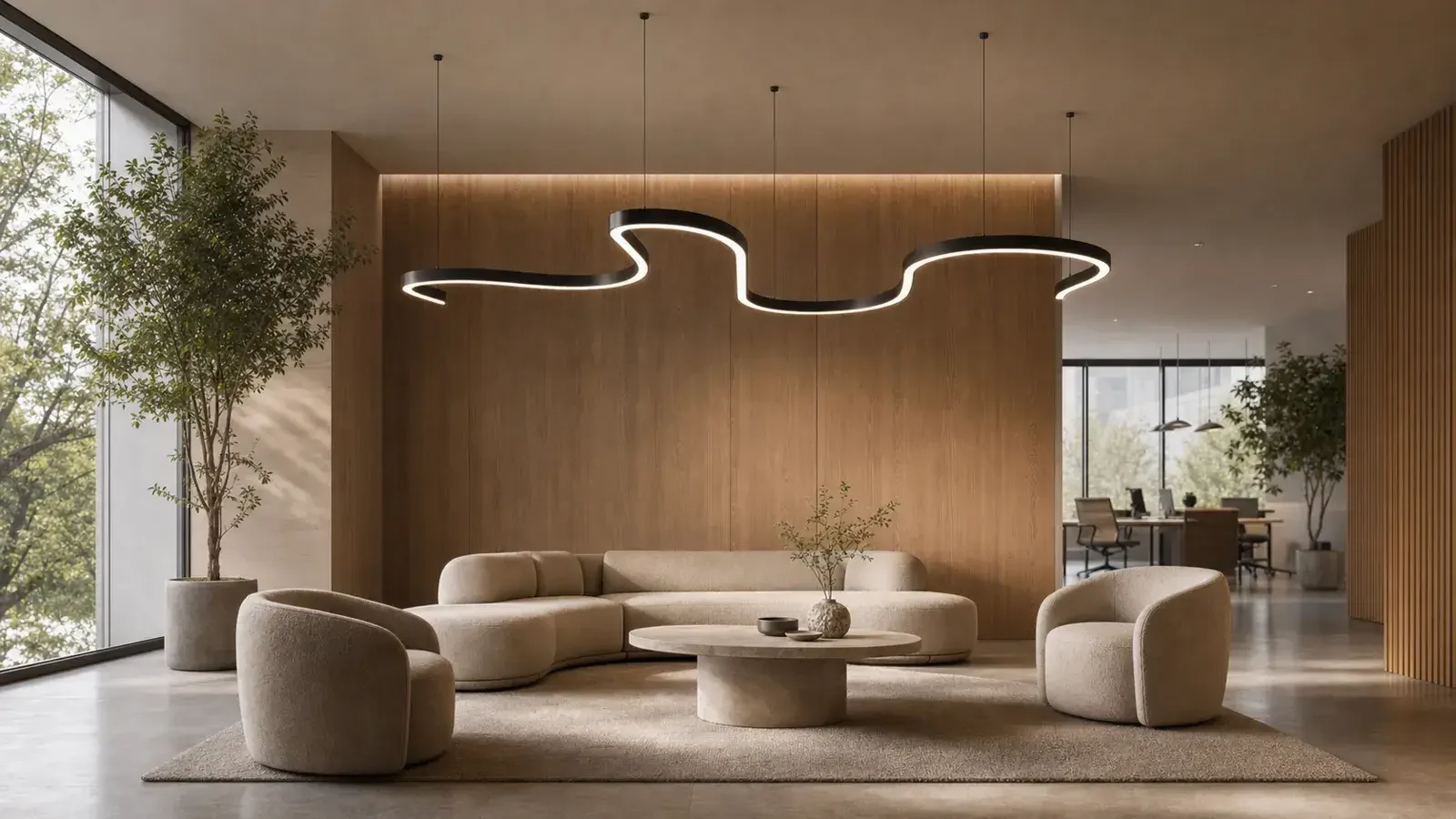
Standard lengths suit fast-track projects. Made-to-measure systems are cut to your exact dimensions so runs finish precisely at walls and columns. Fully bespoke systems add curves, junctions, geometric shapes and special finishes. Read more about bespoke linear lighting.
What to send your lighting supplier
- Drawings or a reflected ceiling plan
- Required lengths and mounting type
- Target light output or lux levels
- Colour temperature and CRI
- Controls and emergency requirements
- Any special shapes or finishes
Further reading at 299 Lighting
Next steps on linear-led.com
Specifying a linear scheme?
Send us your drawings or brief. We'll come back with a shortlist, photometrics and LG7 calculations.
Start a project →Frequently asked questions
What is linear LED lighting?
Linear LED lighting uses long, narrow luminaires to create continuous, uniform lines of light. It is popular in commercial and architectural projects for its clean look and design flexibility.
Is linear LED lighting good for offices?
Yes. It gives excellent uniform illumination for open plan offices and meeting rooms, and direct/indirect options reduce glare and improve visual comfort.
Can linear lights be made to measure?
Yes. 299 Lighting supplies made-to-measure, cut-to-size and fully custom linear systems, including curves, junctions and geometric shapes.