In short
How to design linear LED lighting for open-plan offices: layouts, glare control, LG7 targets, controls and flexibility for changing desk plans.
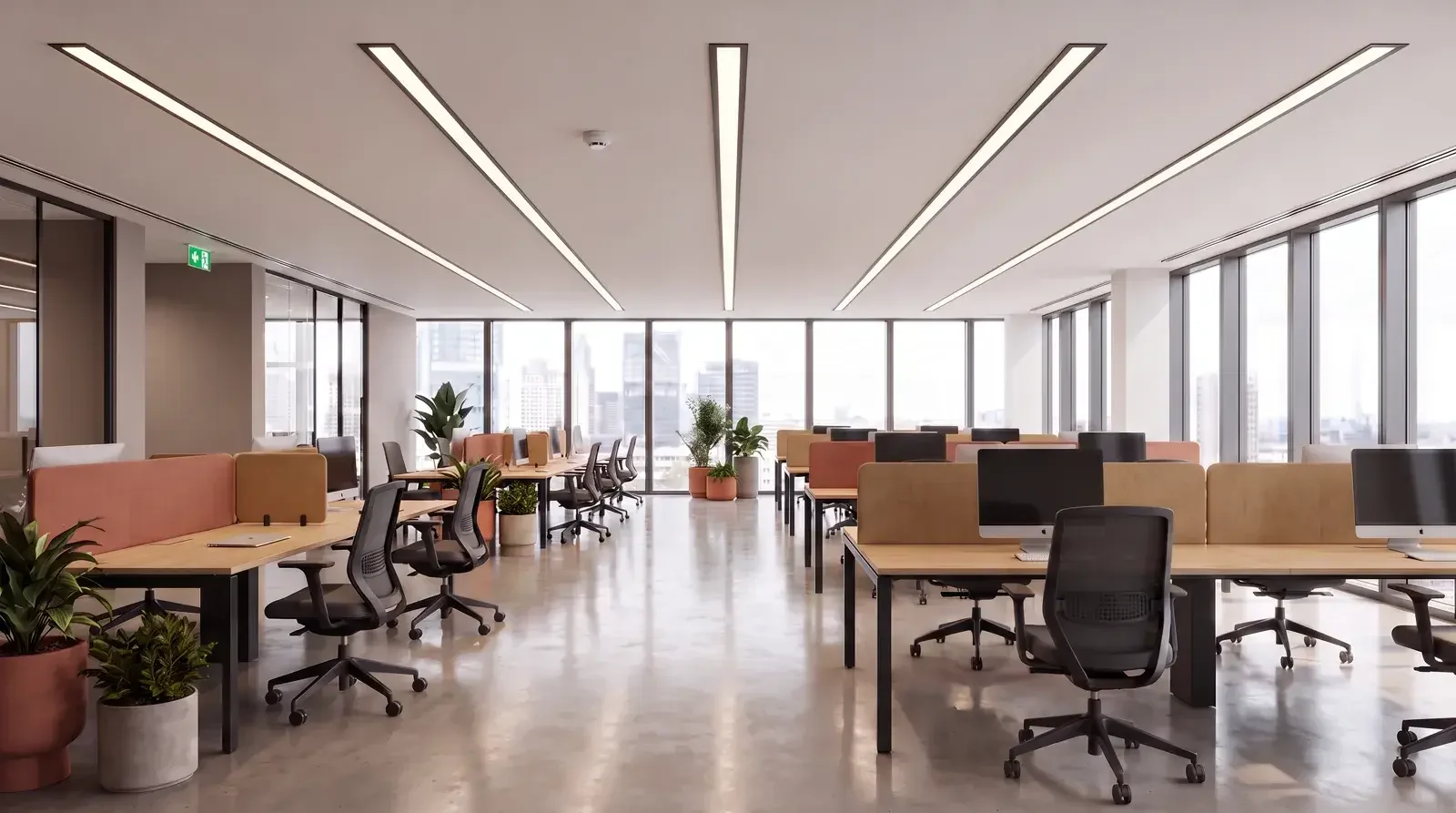
Open-plan offices are the natural home of linear lighting. Long, continuous lines echo desk banks, bring order to large ceilings and deliver the even, low-glare light people need for screen work.
Start with the desk layout
Align linear runs parallel to desk rows and to the main sightline, usually parallel to the windows. This reduces glare, creates a calm ceiling and makes future desk moves easier to plan around.
Choose the distribution
Suspended direct/indirect is the default for most open-plan schemes because the uplight brightens the ceiling and helps meet CIBSE LG7 guidance. Recessed linear suits lower ceilings or spaces where a flat ceiling plane is part of the design.
Performance checklist
- Maintained task illuminance appropriate to the work, typically 300–500 lux
- UGR 19 or lower for screen-based work
- Wall and ceiling brightness in line with LG7
- CRI 80 minimum, CRI 90 in client-facing zones
Plan for change
Continuous systems with DALI or Casambi controls let you re-zone lighting when teams move, without rewiring. Daylight dimming near the windows and presence detection in quieter zones cut energy use.
Rio, Arno, Clyde and Oka all work well in open-plan offices. Compare the ranges or send us your layout.
Further reading at 299 Lighting
Next steps on linear-led.com
Specifying a linear scheme?
Send us your drawings or brief. We'll come back with a shortlist, photometrics and LG7 calculations.
Start a project →Frequently asked questions
What lighting is best for open-plan offices?
Suspended direct/indirect linear LED lighting is the most common choice. It gives uniform, low-glare light and brightens the ceiling in line with CIBSE LG7.
Which way should linear lights run in an office?
Usually parallel to desk rows and windows, which reduces glare and gives a cleaner, more flexible ceiling layout.