In short
Amazon's net-zero delivery station shows logistics is going low-carbon. How to plan linear LED lighting for warehouses, aisles and loading bays.
Amazon has opened its first net-zero delivery station in the UK, a £40m site in Stockton-on-Tees built with emissions 20% lower than previous design principles (edie). Amazon says the 10,800m² building "has been designed to target verification to the UK Net Zero Carbon Buildings Standard", with all-electric systems and rooftop solar panels, and that third-party assessors will review a year of performance data to determine whether it qualifies for formal certification in 2027 (Amazon UK).
Neither report describes the building's lighting, so this guide is not about that site. But it is a clear sign that logistics buildings are being designed and measured on operational energy. In warehouses, lighting often runs for long hours across large areas, so linear LED lighting and good controls are among the most practical ways to cut that energy use.
Why linear suits warehouses
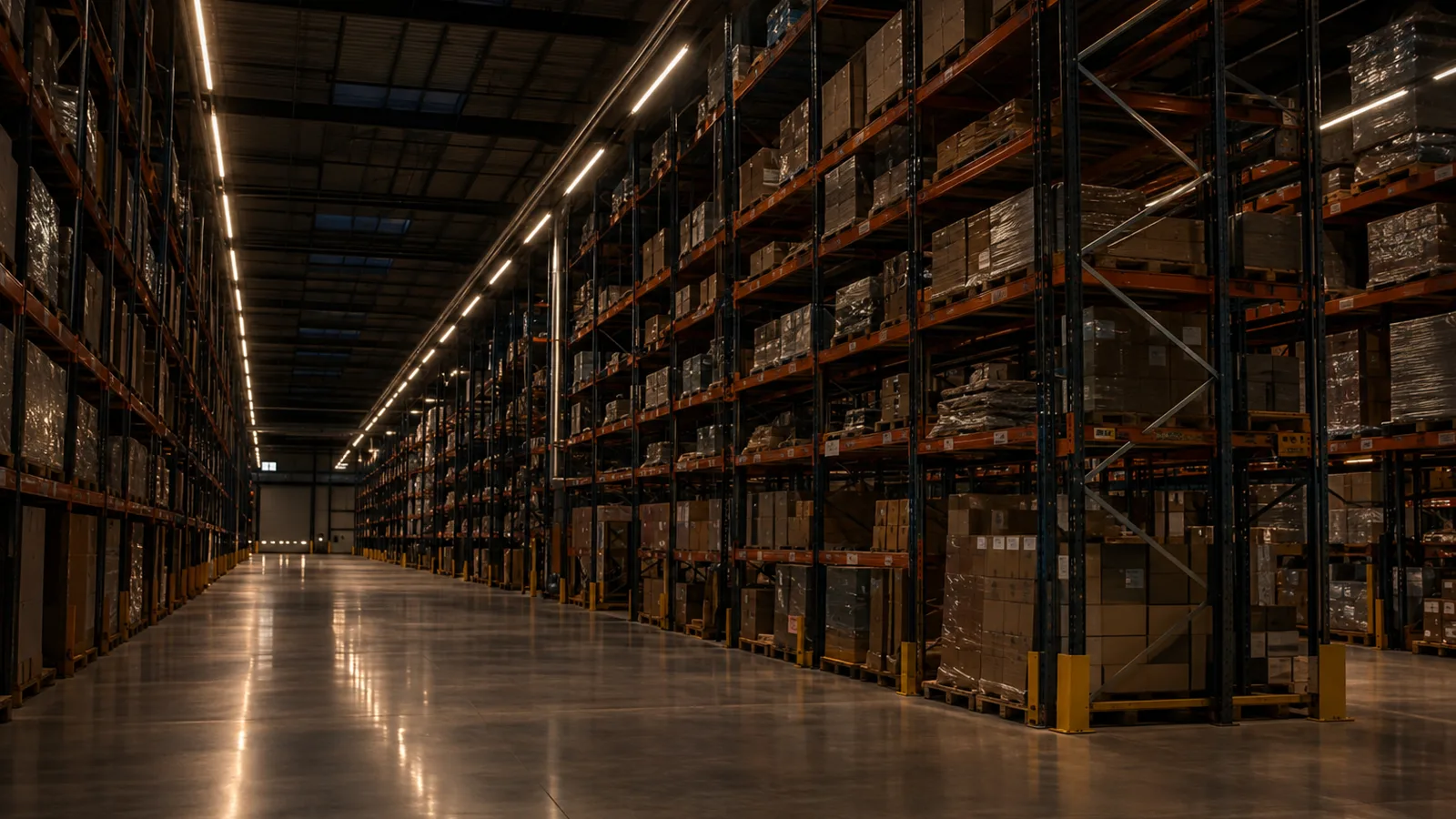
Warehouses are long, repetitive spaces: aisles, racking, picking areas and loading bays. Linear luminaires fit that geometry naturally:
- They follow the aisles, putting light between racks where it is needed
- Continuous runs give even light along long routes. See continuous run linear lighting
- Trunking systems carry power and allow fittings to move when layouts change. See plug-and-play linear systems
- Optics can be chosen for narrow aisles or open areas
Zones and their needs
| Zone | What it needs | Linear approach |
|---|---|---|
| Racking aisles | Light on vertical rack faces | Narrow or asymmetric optics along the aisle |
| Picking and packing | Task light and good colour rendering | Linear over benches, higher CRI |
| Open storage | Even general light | Wider optics on a regular grid |
| Loading bays | Light for vehicles and people | Robust fittings with suitable IP ratings |
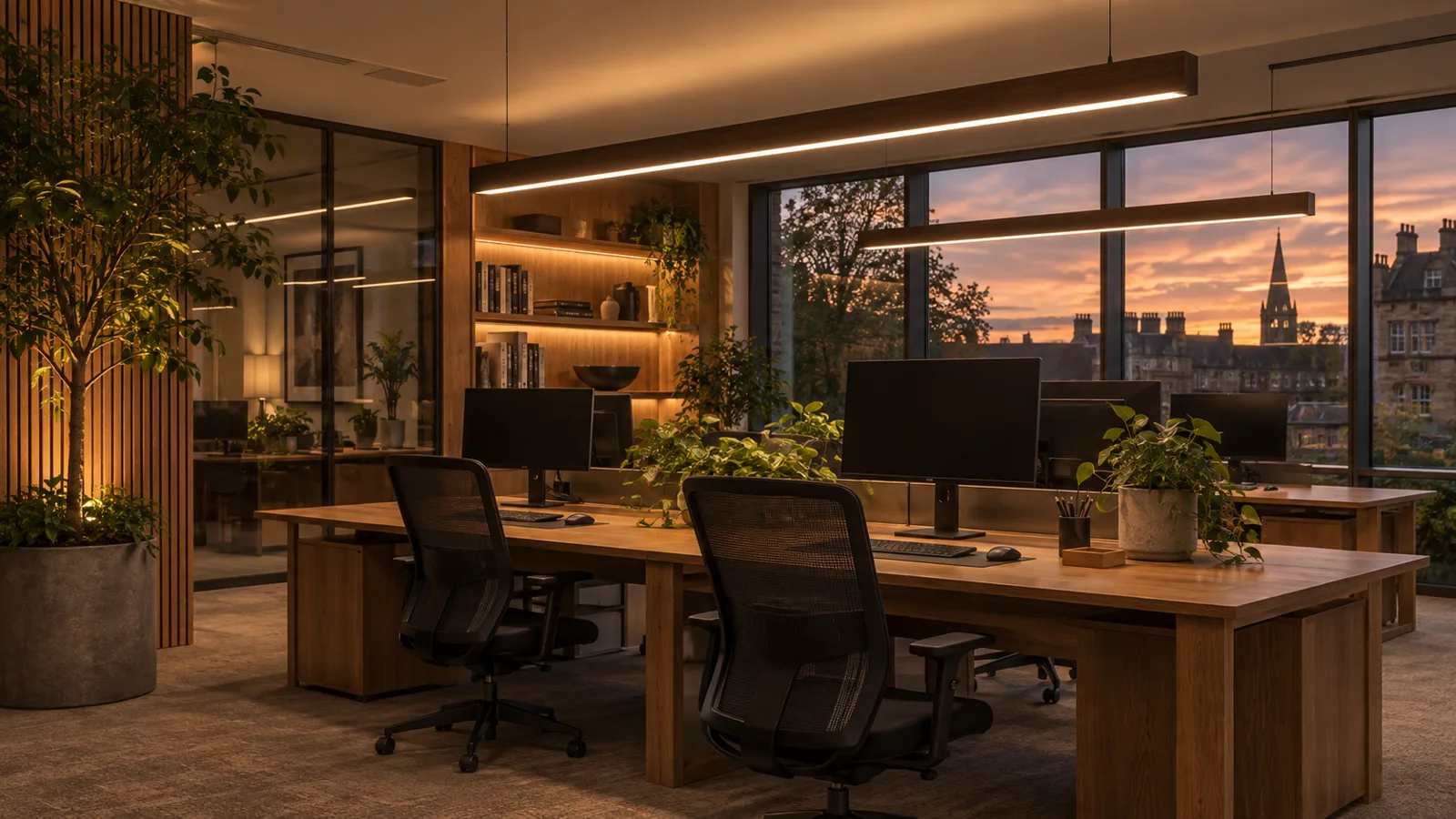
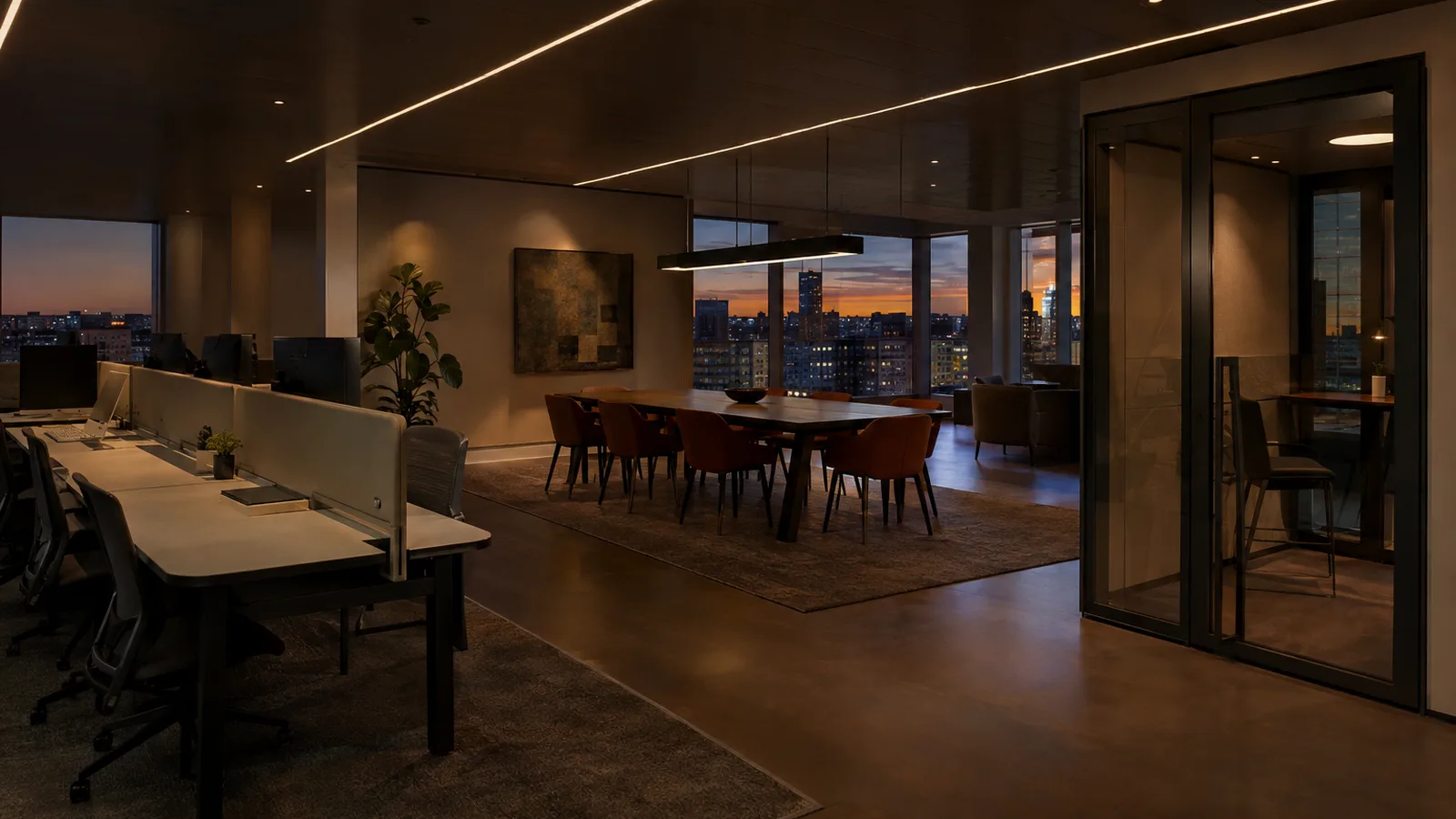
| Offices and welfare | Comfort and low glare | Office-style linear. See UGR 19 explained |
| Circulation | Wayfinding | Continuous lines. See corridor and wayfinding lighting |
Lighting levels for each task should be set using BS EN 12464-1 and the client's operational requirements.
Controls make the biggest difference
In many warehouses, aisles are empty for much of the time. Lighting that stays on at full output wastes energy.
Presence detection
Sensors in each aisle can raise light levels when someone enters and dim them when the aisle is empty. See daylight dimming and presence detection.
Daylight dimming
Rooflights and windows provide daylight in many buildings. Daylight sensors dim the electric lighting when it is not needed.
Addressable control
DALI or wireless controls allow zones to be set up and changed as the layout evolves. See DALI vs Casambi.
Efficacy and energy
For long operating hours, every lumen per watt matters. Check the luminaire efficacy, not just the LED chip figure. Our guide to lumens per metre and efficacy explains what to compare, and how to read a linear LED datasheet covers the rest.
Maintenance and lifetime
Warehouse fittings are often high up and hard to reach. Choose products with a long rated life and good lumen maintenance, and plan access for maintenance from the start. See LED lifetime: L70 and L80.
Emergency lighting
Large open spaces and long aisles need careful emergency lighting design. Integrated emergency modules in linear runs keep ceilings tidy. See emergency lighting in linear systems.
Low-carbon buildings and standards
Net-zero ambitions affect both operational and embodied carbon. Efficient lighting and controls reduce operational energy, while long-life, repairable fittings help with embodied carbon. See the Future Buildings Standard and linear lighting and BREEAM and WELL lighting.
Existing warehouses
Many warehouses still have older fluorescent or high-intensity discharge lighting. A retrofit can be a cost-effective route to LED. relumen8.com explains replacing fluorescent tubes with LED and LED retrofit payback. For new linear runs in existing buildings, see surface linear for refurbishment.
Common mistakes
- Spacing fittings for the floor area rather than the aisle layout
- Leaving aisle lighting at full output all day
- Ignoring the light needed on vertical rack faces
- Using office-grade fittings in dusty or damp loading areas
- Forgetting maintenance access for high-level fittings
Mezzanines and offices
Many logistics buildings include mezzanine floors and offices. Mezzanines have lower ceilings, so fittings need to be chosen for the mounting height and to avoid glare. Offices and welfare areas should follow office lighting practice. See CIBSE LG7 explained and microprismatic vs opal diffusers.
Checklist
- Map aisles, picking areas, storage and loading bays
- Set lighting levels for each zone
- Choose optics to suit aisle widths and mounting heights
- Specify presence and daylight controls
- Plan emergency lighting and maintenance access
- Record everything for handover and performance monitoring
For downlights in offices and welfare areas, see recessed lighting for offices, and for suspended options, suspended lighting for high ceilings.
How 299 Lighting can help
299 Lighting supplies linear lighting and bespoke solutions for industrial and commercial buildings, with layouts, calculations and project support. For existing buildings, see our retrofit service. Send us your plans to start.
Further reading at 299 Lighting
Next steps on linear-led.com
Specifying a linear scheme?
Send us your drawings or brief. We'll come back with a shortlist, photometrics and LG7 calculations.
Start a project →Frequently asked questions
What did Amazon open in Stockton-on-Tees?
Its first UK net-zero delivery station, a £40m site built with emissions 20% lower than previous design principles, according to edie.
Why is linear lighting used in warehouses?
Linear fittings follow aisles and racking, giving even light along long routes, and trunking systems make layout changes easier.
How can warehouse lighting save energy?
Efficient LED luminaires combined with presence detection and daylight dimming, so aisles are only fully lit when in use.
What lighting levels do warehouses need?
Levels depend on the task and should be set using BS EN 12464-1 and the client's operational requirements.