In short
How to use lumens per metre and lm/W efficacy to size and compare linear LED lighting for offices and commercial interiors.
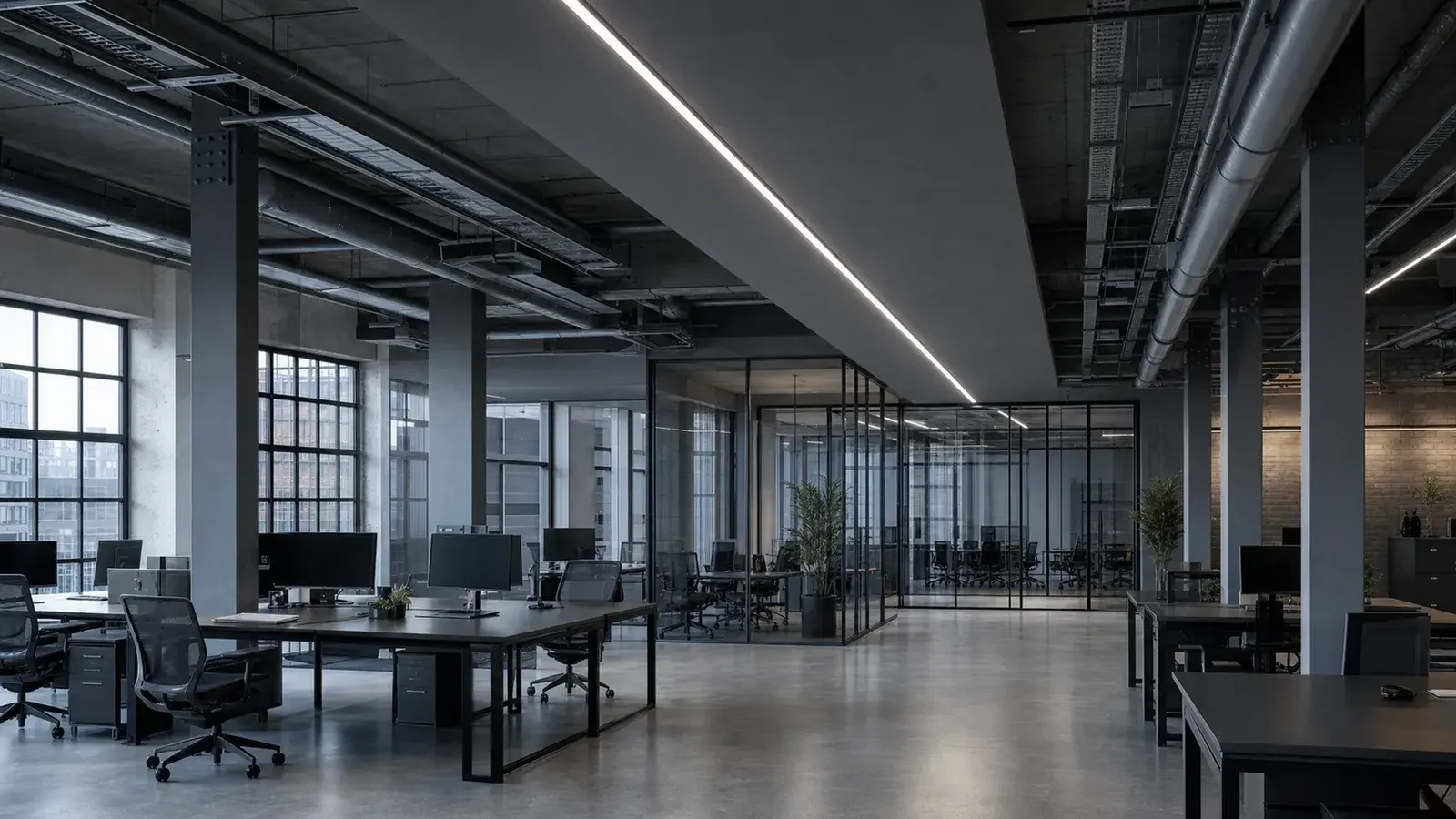
Linear lighting is often specified per metre rather than per fitting. Two numbers help you size a scheme and compare products fairly: lumens per metre and efficacy.
Lumens per metre
This is the light output of one metre of linear luminaire. It lets you compare products of different lengths and estimate how many metres of line a space needs.
Efficacy (lm/W)
Efficacy is luminaire lumens divided by system watts. It is the best single measure of energy efficiency, and higher efficacy means lower running costs and a better energy performance for the building.
Using them together
- Pick a target illuminance for the space
- Choose the output per metre that achieves it with your row spacing
- Compare products at the same output using efficacy
- Confirm with a proper lighting calculation
Don't forget the optic
Two products with the same lumens can perform differently because of their optics. A good optic puts light where it is needed and controls glare, so always check the photometric file too.
Ask for a lighting calculation.
Further reading at 299 Lighting
Next steps on linear-led.com
Specifying a linear scheme?
Send us your drawings or brief. We'll come back with a shortlist, photometrics and LG7 calculations.
Start a project →Frequently asked questions
What is a good efficacy for linear LED lighting?
Modern commercial linear LED luminaires typically achieve well over 100 lm/W. Compare products using luminaire lumens and system watts.
How do I work out how much linear lighting I need?
Start from the target illuminance, choose an output per metre and row spacing, then confirm with a lighting calculation using the photometric data.