In short
What the 2026 BCO Awards say about regeneration, refurbishment and workplace experience, and how linear lighting supports those priorities.
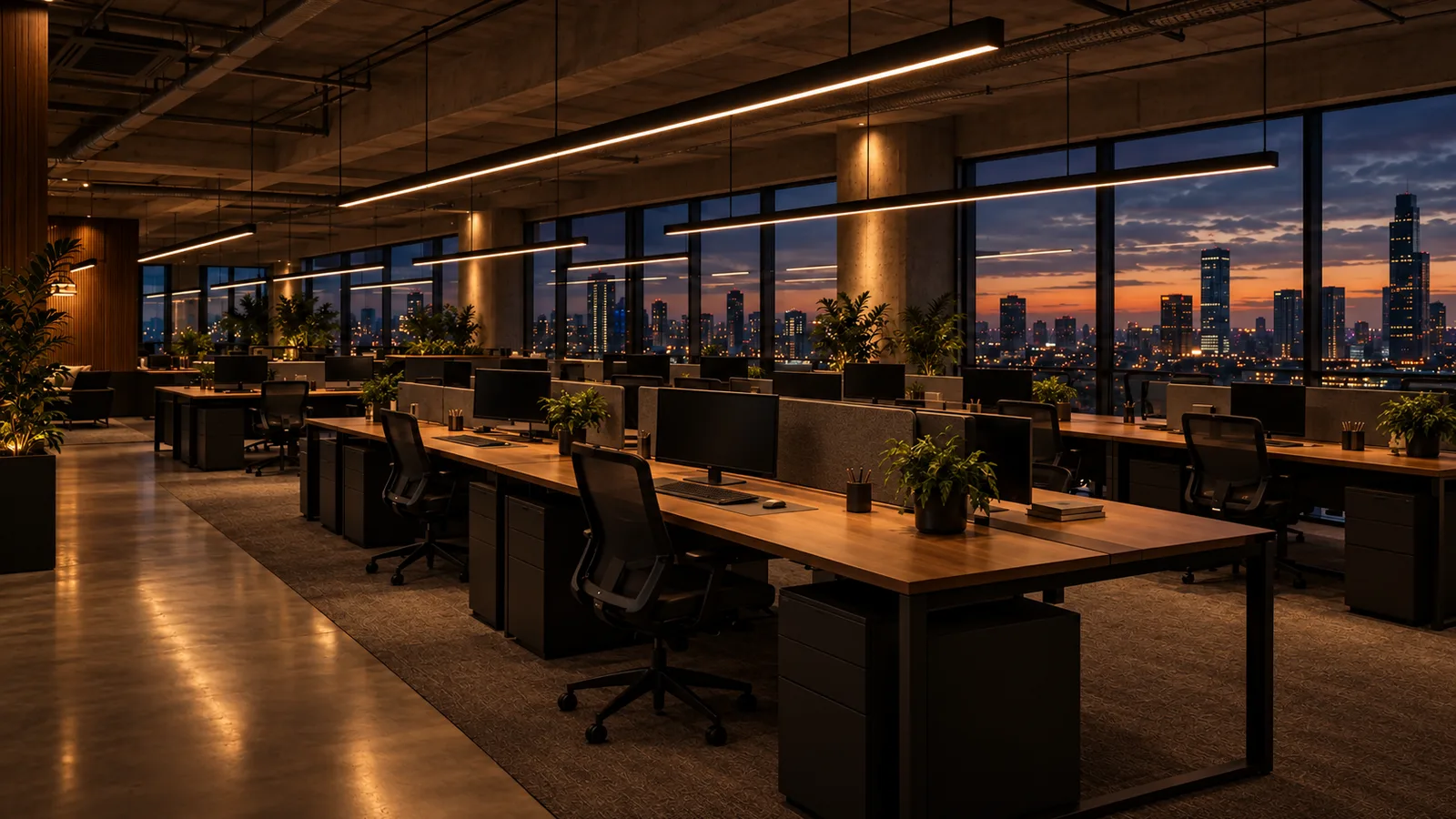
The 2026 British Council for Offices National Awards were presented on 6 October at London's JW Marriott Grosvenor House, with Swansea's 71/72 Kingsway taking Best of the Best and Commercial Workplace (Workplace Insight). Workplace Insight's report framed the winners around three themes: regeneration, sustainability and workplace experience.
\nCivic Millgate in Wigan won the Refurbished/Recycled Workplace award, and the Renold Building in Manchester won Innovation, with its refurbishment reported to have cut embodied carbon by 71% (Workplace Insight). GSK's London HQ won Customer Experience for corporate occupiers after research with more than 800 staff.
\nLighting was not the headline of any of those awards. But each theme has direct consequences for how linear lighting is specified in offices. This guide sets them out.
\nTheme 1: refurbishment over new build
\nTwo of the most talked-about winners were refurbishments. When the structure stays, the ceiling often stays too, or is exposed. That changes the lighting brief:
\n- Exposed soffits favour suspended or surface linear, not recessed. See surface linear lighting for refurbishment
- Existing grid ceilings may be retained, so luminaire modules must suit them
- Where existing fittings are sound, a retrofit can be the lowest-carbon option. See retrofitting suspended linear fittings
Theme 2: sustainability and carbon
\nSustainability now covers embodied carbon and operational energy. For linear lighting, that means:
\n| Priority | What to specify |
|---|---|
| Operational energy | High luminaire efficacy, measured at the luminaire, with presence and daylight control |
| Embodied carbon | Fewer, longer runs; aluminium with recycled content where available; serviceable drivers |
| Longevity | Replaceable LED modules and drivers, clear L80 or L90 lifetime data |
| Compliance | Check against the Future Buildings Standard for new buildings |
Our guides to the Future Buildings Standard, lumens per metre and efficacy and daylight dimming and presence detection go into detail.
\nTheme 3: workplace experience
\nGSK's award followed research with more than 800 staff. Workplace experience is about the people in the building, and lighting is one of the things they notice first.
\nVisual comfort
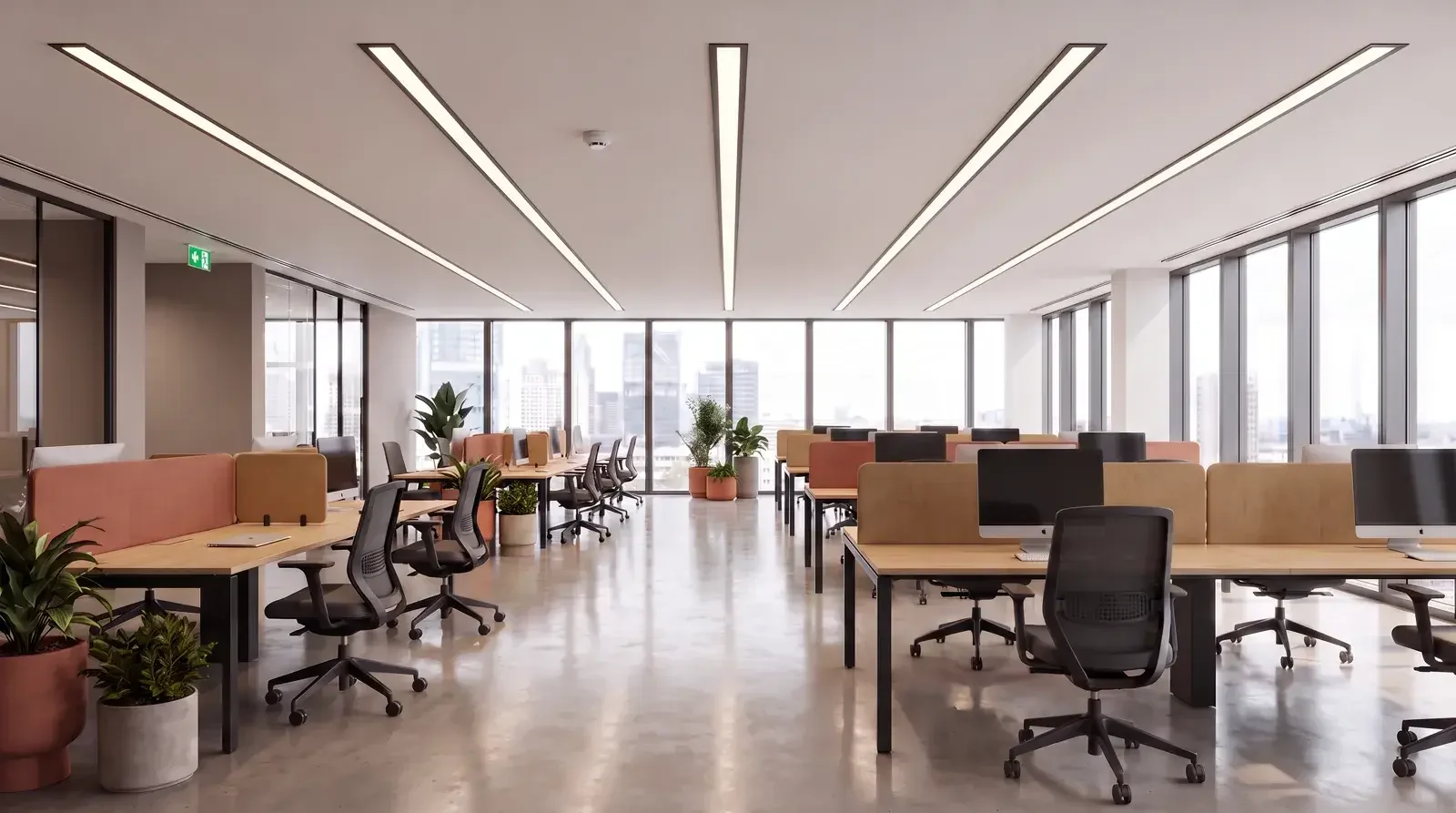
\nGlare from bright luminaires and screens is a common complaint. Low-glare optics and UGR 19 in desk areas are the starting point. See UGR 19 explained.
\nLight on walls and ceilings
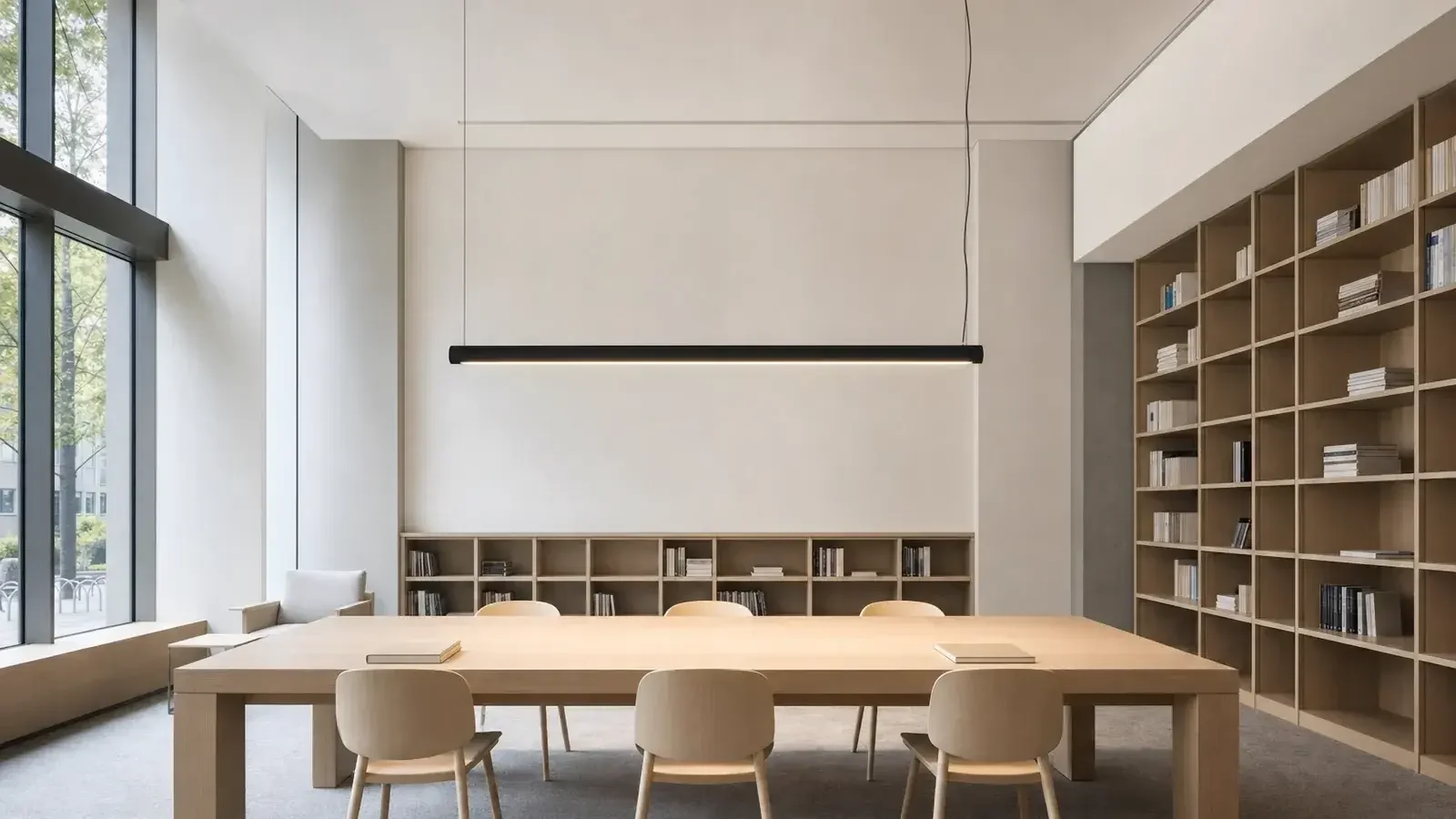
\nDirect/indirect linear pendants light the ceiling as well as the desk, so spaces feel brighter and less gloomy at the same energy. Read direct vs indirect linear lighting.
\nVariety between zones
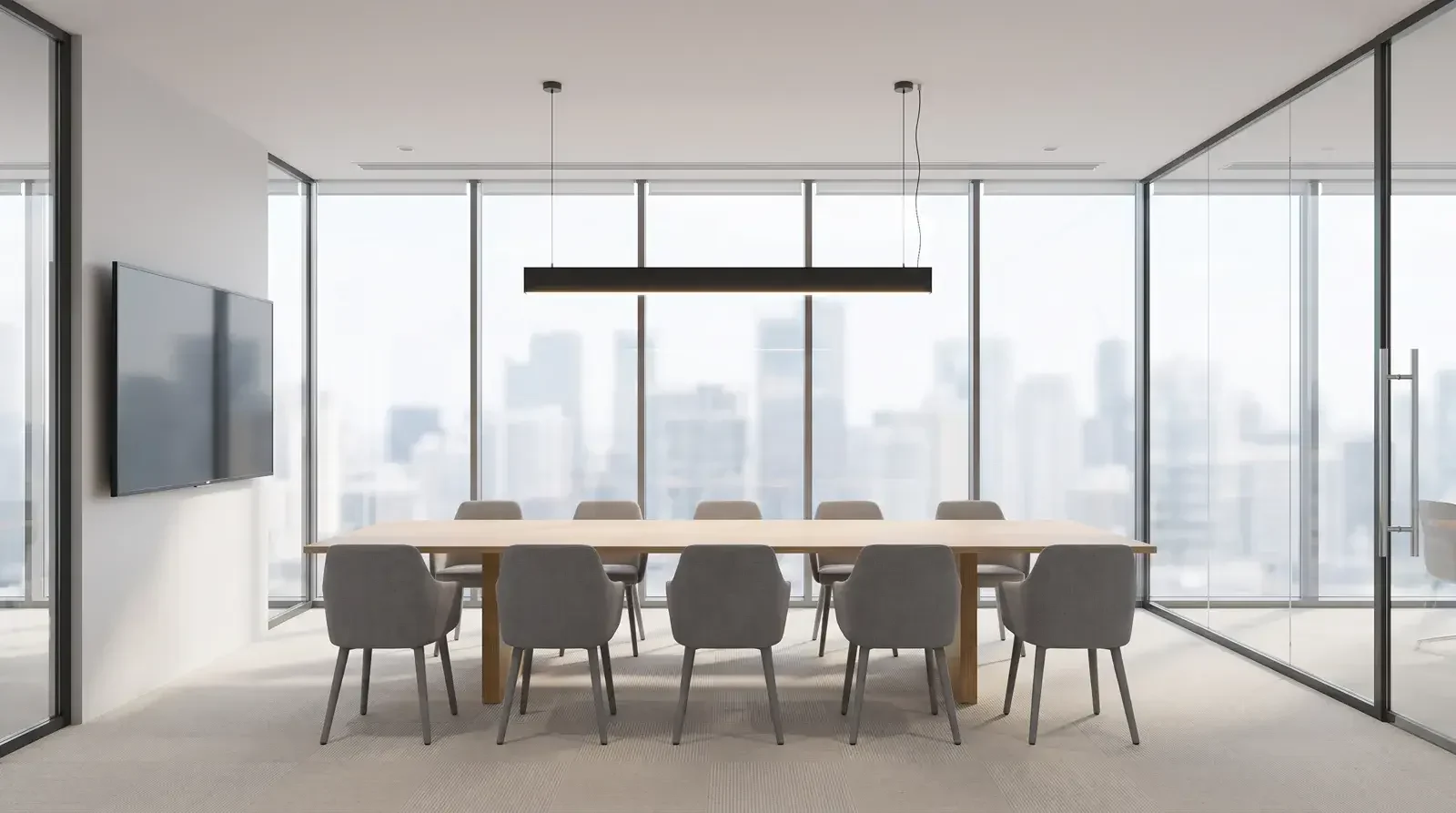
\nModern offices mix focus areas, meeting rooms, lounges and receptions. A single lighting type across all of them feels institutional. Linear can still be the backbone, with feature pendants, downlights and warmer colour temperatures where people gather. See boardroom and meeting room lighting and reception lighting.
\nControl for people
\nPersonal or zone control, and tunable white where it is justified, help people feel in charge of their space. Our tunable white guide explains when it is worth it.
\nA practical checklist
\n- Decide early whether the ceiling is retained, replaced or exposed
- Set targets for lux, UGR, CRI and efficacy at the luminaire
- Plan control zones around how people will use each area
- Ask for serviceability and lifetime data for every linear type
- Consider retrofit for sound existing fittings before replacement
- Coordinate CAT A and CAT B lighting. See CAT A vs CAT B lighting
Questions to ask at stage 2
\nThe awards themes translate into early design questions. Asking them at stage 2 avoids redesign later, when ceilings, containment and control strategies are already fixed.
\n- Will the ceiling be kept, replaced or removed? This decides between recessed, surface and suspended linear.
- Which existing fittings could be reused or retrofitted, and which must go?
- What efficacy target applies, and is it measured at the luminaire?
- How will people use each zone across the day, and who controls the lighting?
- What evidence will the client need for sustainability reporting, such as product data, lifetime and recycled content?
For refurbishments, a short lighting survey early in the programme often answers the first two questions. For new floors, a test calculation using real photometric files answers the third. Both are cheap compared with changing the specification after tender.
\nRelated reading
\nFor pendants without a linear form, see suspended lighting for offices. For downlights in meeting rooms and corridors, recessed lighting for offices. For seamless plaster-in lines, trimless lighting for offices.
\n299 Lighting can help with layouts, calculations and project support for office fit-outs and refurbishments. Send us your drawings to start.
Further reading at 299 Lighting
Next steps on linear-led.com
Specifying a linear scheme?
Send us your drawings or brief. We'll come back with a shortlist, photometrics and LG7 calculations.
Start a project →Frequently asked questions
Who won Best of the Best at the 2026 BCO Awards?
71/72 Kingsway in Swansea won Best of the Best and the Commercial Workplace award at the 2026 BCO National Awards on 6 October.
What linear lighting suits refurbished offices?
Where soffits are exposed, suspended or surface-mounted linear usually works better than recessed. Sound existing fittings may be retrofitted instead of replaced.
How does lighting affect workplace experience?
Low glare, light on walls and ceilings, different lighting for different zones, and user control all help people feel comfortable in an office.
Is direct/indirect linear lighting more efficient?
It can make a space feel brighter at the same energy by lighting the ceiling as well as the desk, but compare luminaire efficacy and control strategy for each option.