In short
How to plan linear LED lighting in 1930s and Art Deco office refurbishments: heritage features, ceilings, suspended and recessed options, and controls.
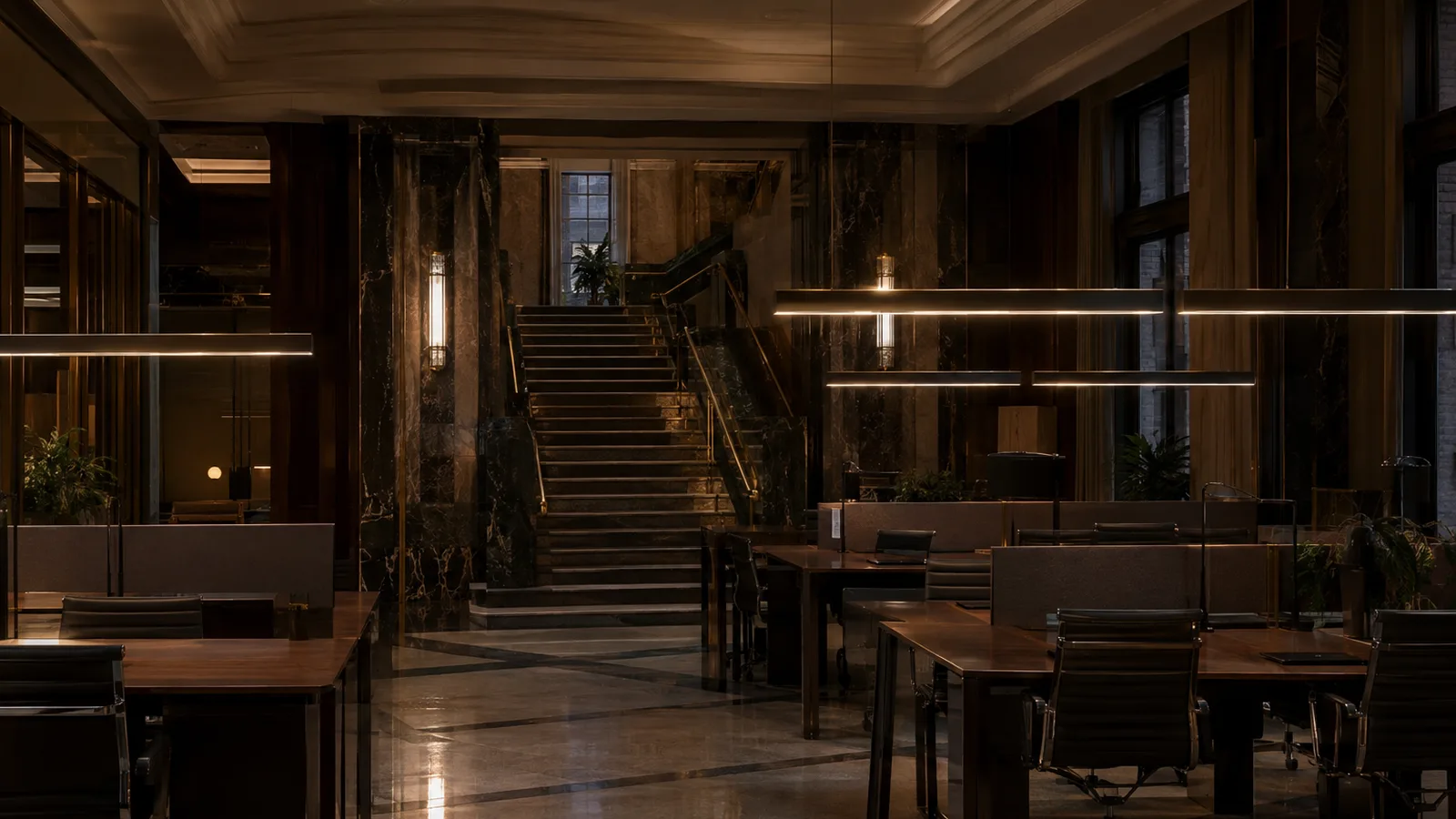
Helical has let three floors of Brettenham House, the 128,000 sq ft 1930s Art Deco office building near Waterloo Bridge, to FGS Global. Property Week reported on 22 October 2026 that the refurbishment is set to complete at the end of October (Property Week). McLaren Construction, the main contractor, describes the £90 million project as a remodelling and refurbishment that includes replacing and upgrading building services. It targets BREEAM Outstanding, NABERS 5*, EPC A and WELL Platinum (McLaren). Helical's project page notes heritage features retained inside, including two marble-clad stair cores (Helical).
Projects like this show the challenge with interwar offices: modern workplace lighting has to fit around architecture that was designed long before LED. This guide covers how to approach it with linear lighting.
Start with a survey
Before choosing fittings, find out what the building allows:
- Ceiling heights and any original cornices, coffers or beams
- Whether the slab can take fixings, and where services can run
- Original features that must stay visible, such as stairs, entrance halls and decorative plaster
- Window positions and daylight on each floor
- Any listed building consent or planning conditions
Early decisions on ceilings affect everything else. A raised ceiling may expose original features, while a new suspended ceiling hides services but can hide heritage too.
Choosing the mounting
| Situation | Linear approach | Why |
|---|---|---|
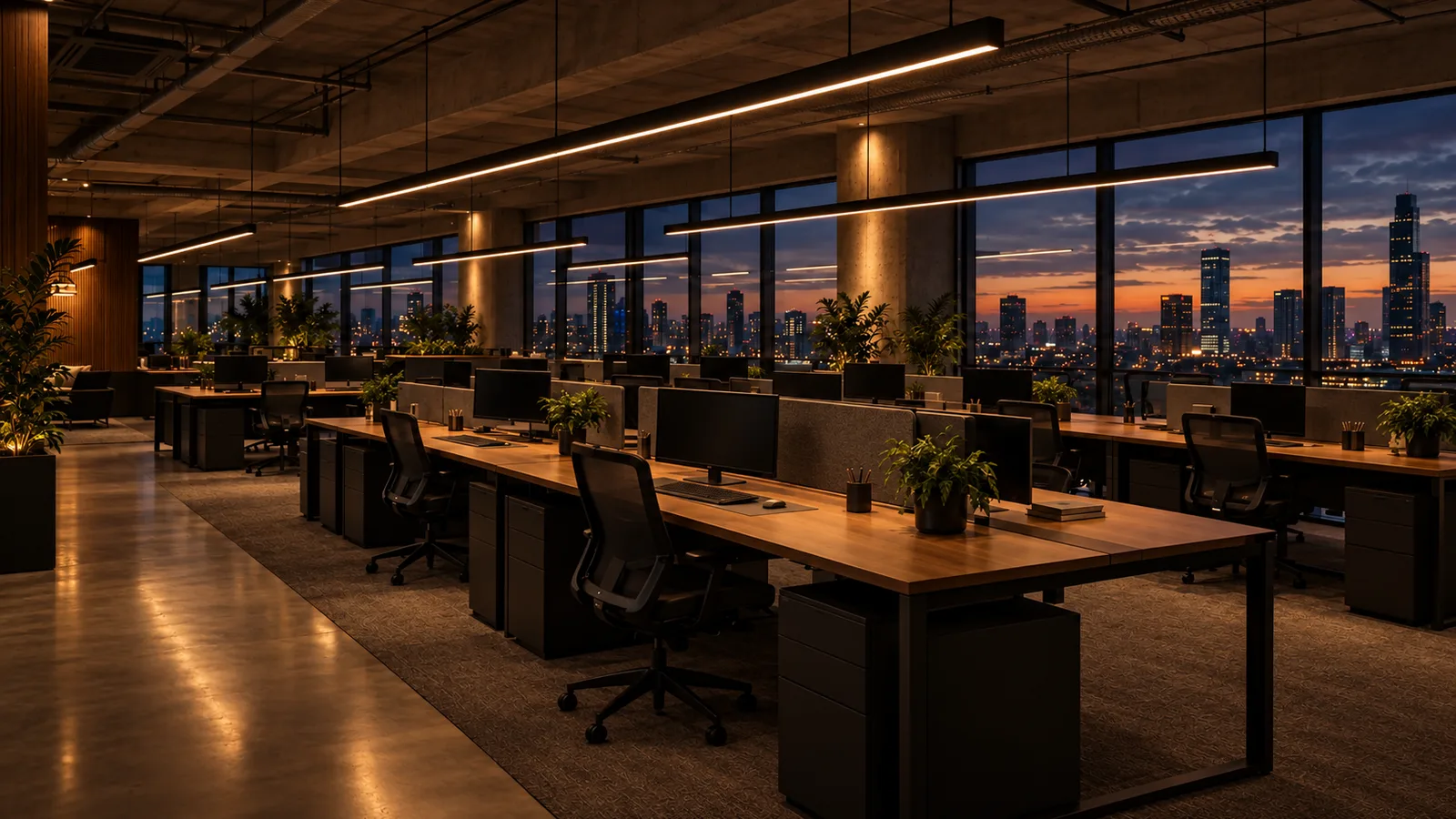
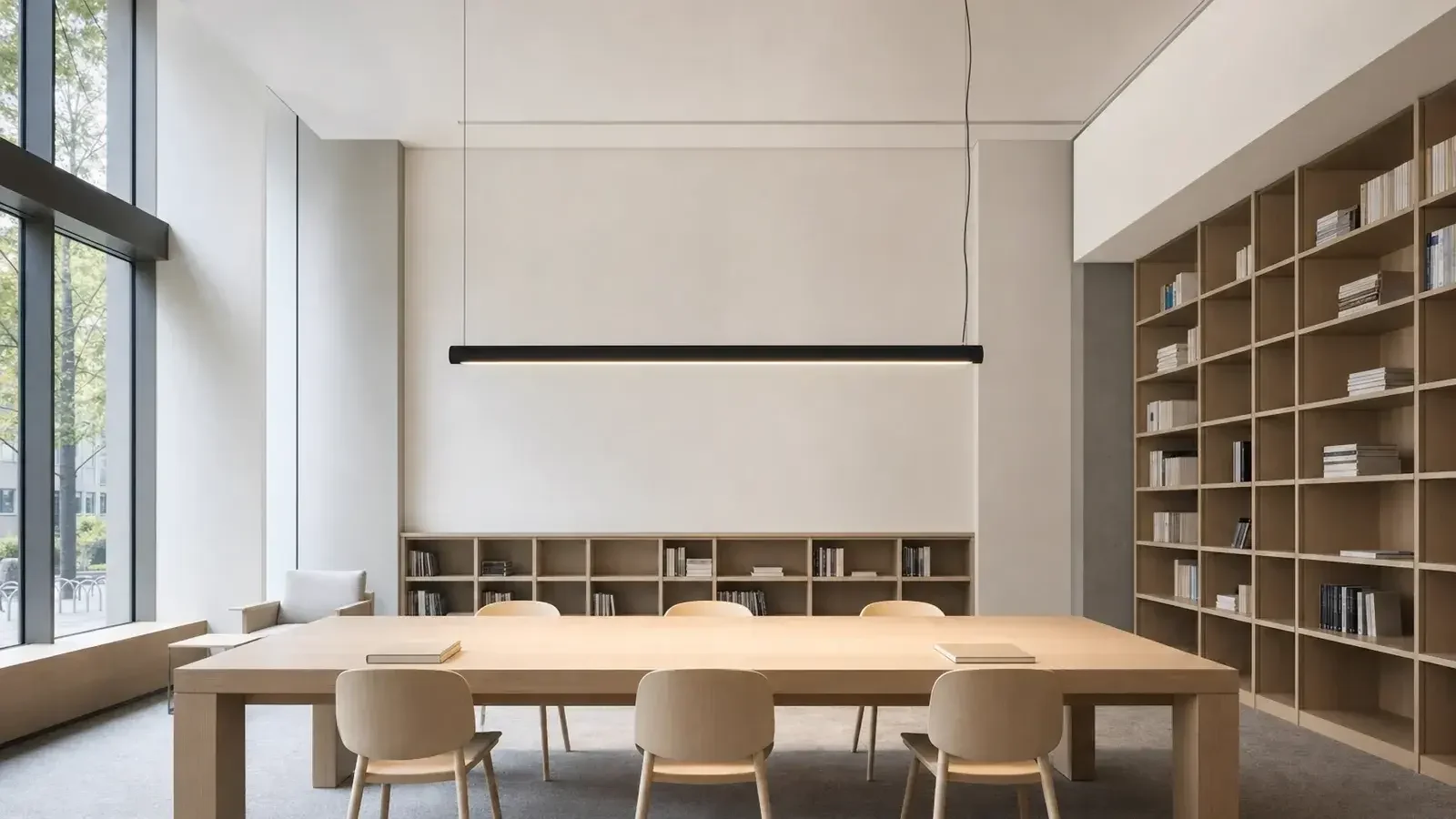
| Exposed or restored soffit | Suspended linear, direct/indirect | Lights the ceiling and keeps fixings to a minimum |
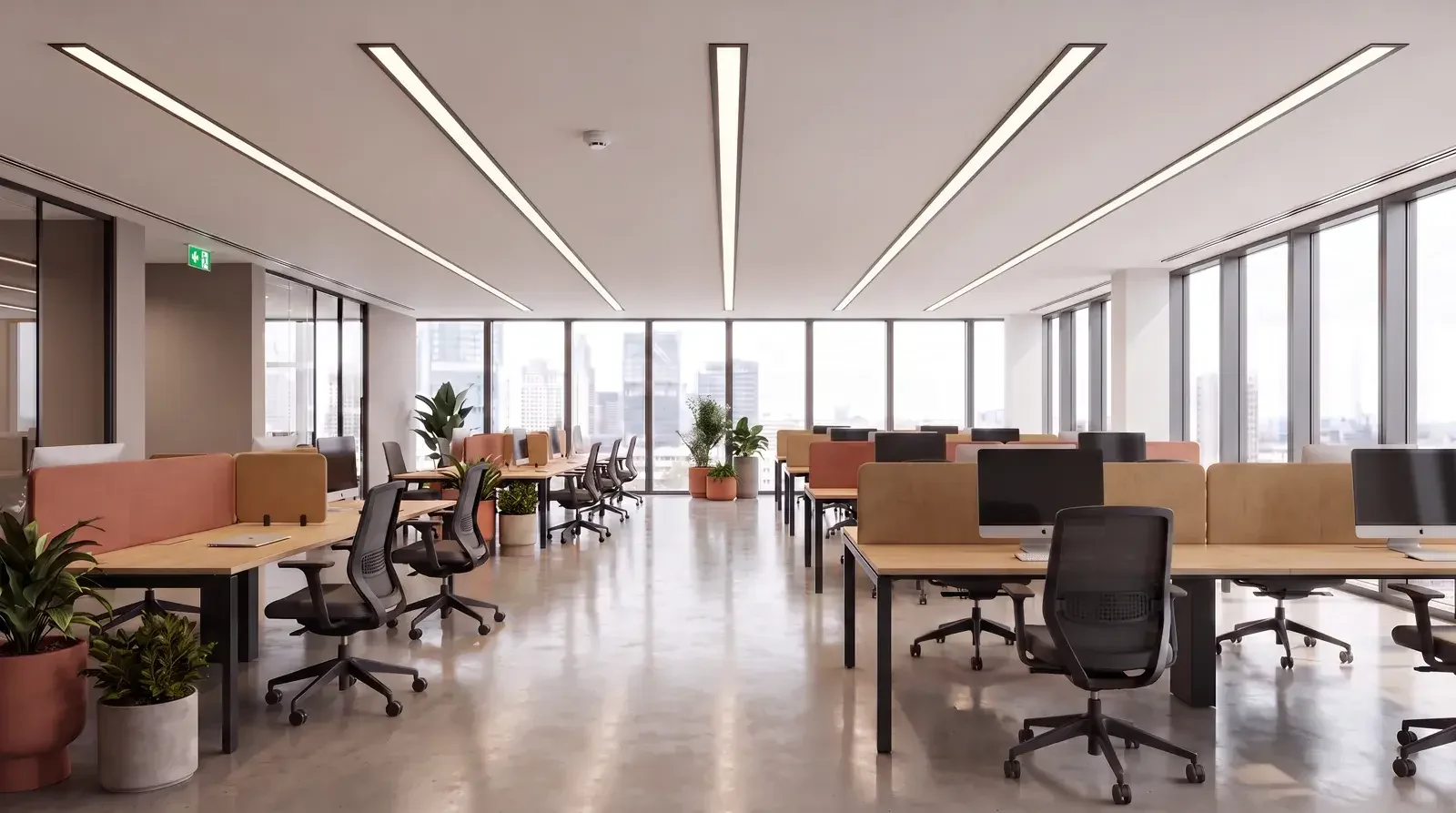
| New plasterboard ceiling | Recessed linear | Clean lines that leave heritage areas uncluttered |
| Slab cannot be cut | Surface linear | Mounted directly, with services in trunking |
| Feature reception or stair | Bespoke profiles or light lines | Picks up the geometry of the original design |
Direct/indirect fittings can be useful under higher ceilings, as some light goes up onto the soffit. Read direct vs indirect linear lighting for the differences.
Respecting the architecture
Art Deco interiors rely on strong lines, symmetry and rich materials. Linear lighting can work with that rather than against it:
- Align runs with column grids, window bays and ceiling features
- Keep runs symmetrical about main axes where the architecture is symmetrical
- Choose finishes and colours that suit the interior, from white to bronze tones
- Use continuous runs where a single clean line suits the space
- Keep heritage areas, such as stair halls, free of clutter
Light quality for modern workplaces
Refurbished offices still need to meet modern standards. BS EN 12464-1 sets a UGR limit of 19 for offices. See UGR 19 explained and microprismatic vs opal diffusers. Colour rendering also matters where materials such as marble, timber and brass are part of the design: see CRI for architects and colour temperature.
Energy targets and controls
Ambitious targets such as BREEAM, NABERS UK and EPC ratings put attention on lighting energy. Efficient luminaires and good controls both help:
- Check efficacy on the data sheet: see lumens per metre and efficacy
- Add daylight dimming and presence detection, especially near large windows
- Choose a control system that suits the landlord and tenants: see DALI vs Casambi
For certification, read BREEAM and WELL lighting.
Cat A, Cat B and tenants
Speculative refurbishments are often delivered to Cat A, with tenants fitting out later. Plan the lighting so it can adapt to different layouts without being stripped out. Our guide to Cat A vs Cat B lighting explains the stages, and plug-and-play linear systems can make later changes easier.
Keep what can be kept
Some interwar buildings already have fittings that can be upgraded rather than replaced. relumen8.com explains LED retrofit for listed and heritage buildings. For plaster-in details in heritage settings, see trimless lighting in listed buildings, and for downlights in refurbishments, recessed lighting in refurbishments. For feature pendants in reception areas, see feature pendants for receptions.
Common pitfalls
- Fixing into original plaster without checking its condition or any consent conditions
- Ignoring the stair halls, which are often the most important heritage spaces and need their own lighting approach
- Uneven runs that cut across window bays or ceiling features
- Mixed colour temperatures between floors, reception and stairs
- Leaving controls too late, so cabling routes and sensor positions clash with the ceiling design
Good records help too. Keep a schedule of every fitting, its location, finish and control address, so tenants and facilities teams can maintain and adapt the lighting later without guesswork.
Mock-ups help with most of these. A short run of the chosen fitting, installed in a typical bay, lets the design team, heritage advisers and the client agree the look before the full order. It is also a good time to check light levels, glare and how the fitting looks against original finishes.
How 299 Lighting can help
299 Lighting supplies linear lighting and bespoke solutions for office refurbishments, with layouts, calculations and project support. Send us your drawings to start.
Further reading at 299 Lighting
Next steps on linear-led.com
Specifying a linear scheme?
Send us your drawings or brief. We'll come back with a shortlist, photometrics and LG7 calculations.
Start a project →Frequently asked questions
When does the Brettenham House refurbishment complete?
Property Week reported on 22 October 2026 that the refurbishment was set to complete at the end of October.
What lighting suits an Art Deco office?
It depends on the ceiling. Suspended direct/indirect linear suits restored soffits, recessed linear suits new plasterboard ceilings and surface linear suits slabs that cannot be cut.
Do refurbished offices need to meet UGR 19?
BS EN 12464-1 sets a UGR limit of 19 for offices, so check glare ratings for the luminaires and layout.
Can existing fittings in older offices be kept?
Sometimes. Where housings are sound, a retrofit can replace the LED gear and keep the fitting.